The Young Royal Lady
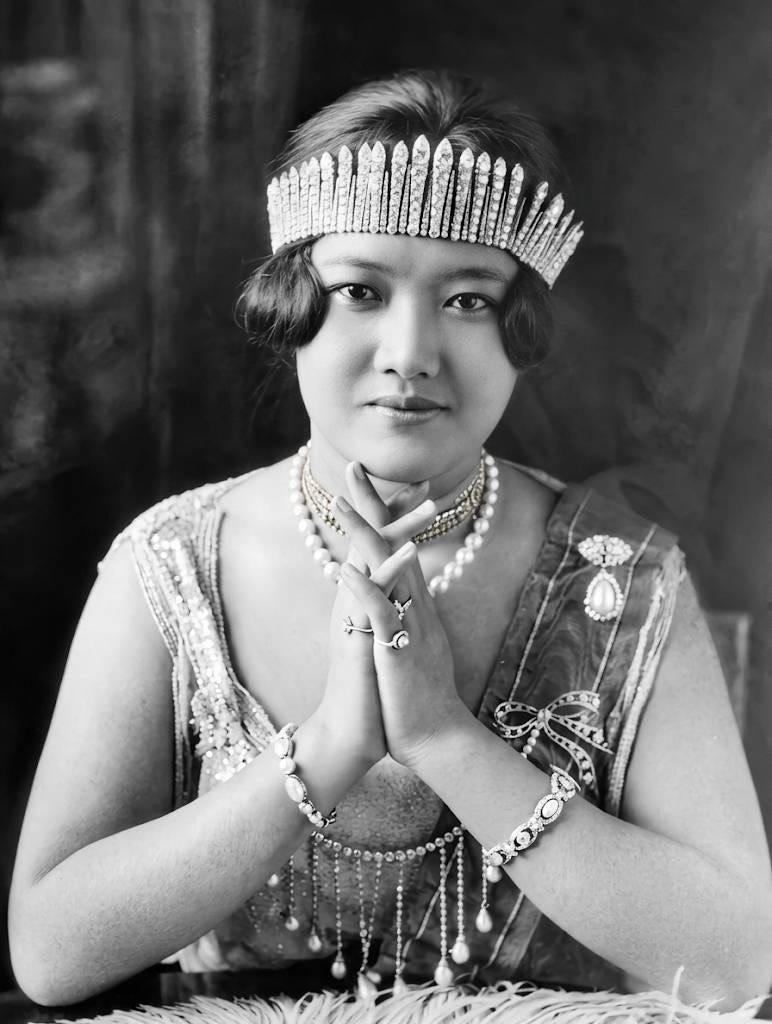
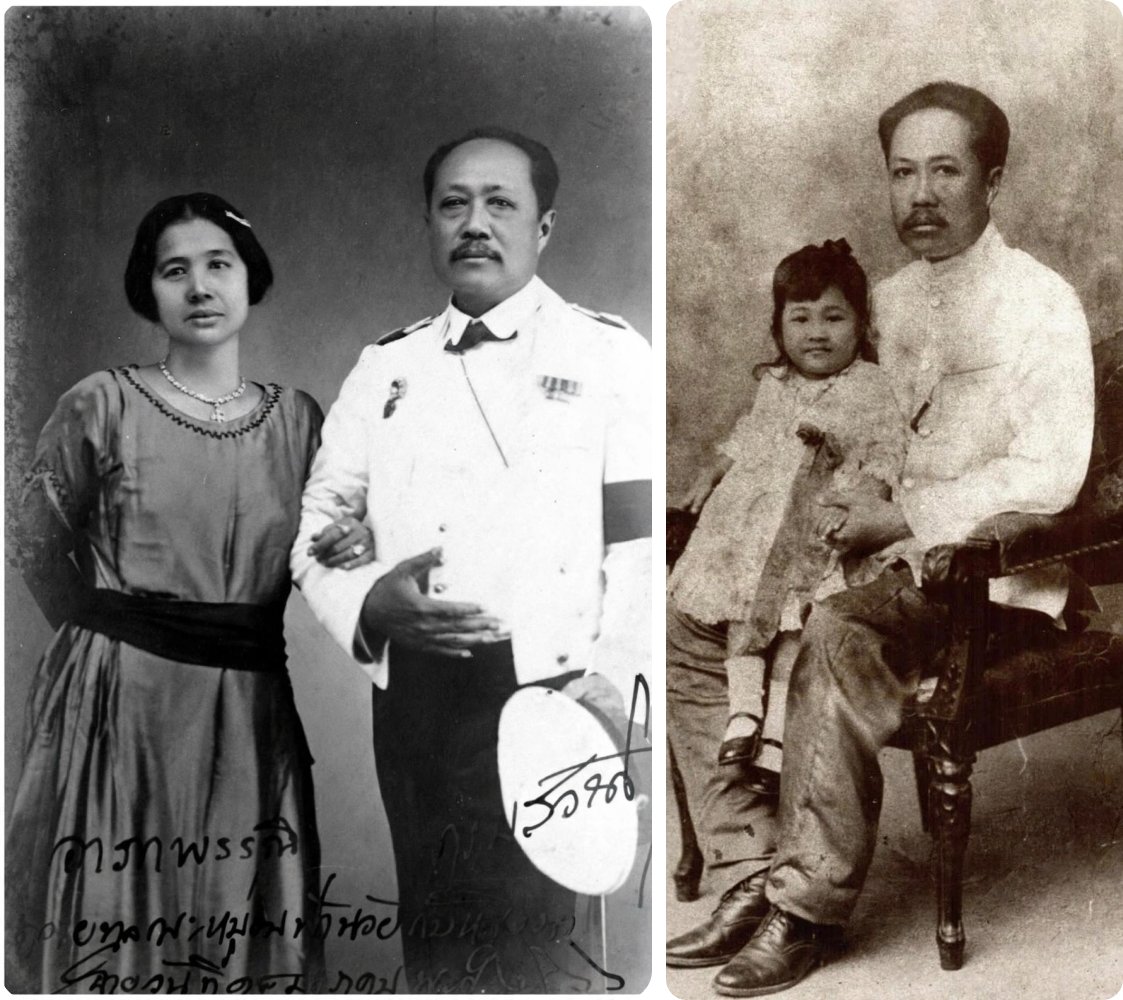
H.M. Queen Rambhai Barni of the Seventh’s Reign was born a princess of Mom Chao (M.C.) rank on Tuesday, December 30, 1904. H.R.H. Prince Svasti Sobhon, the youngest son of H.M. King Mongkut (Rama IV), was her father. H.R.H. Princess Abha Barni, a granddaughter of the same king, was her mother. H.M. Queen Rambhai Barni was the third of eight siblings by her and the first of three sisters. The two younger sisters and the eldest brother died while still young, leaving four brothers and herself
Under the Royal Grace of
"Somdet Pa" (Royal Aunt)
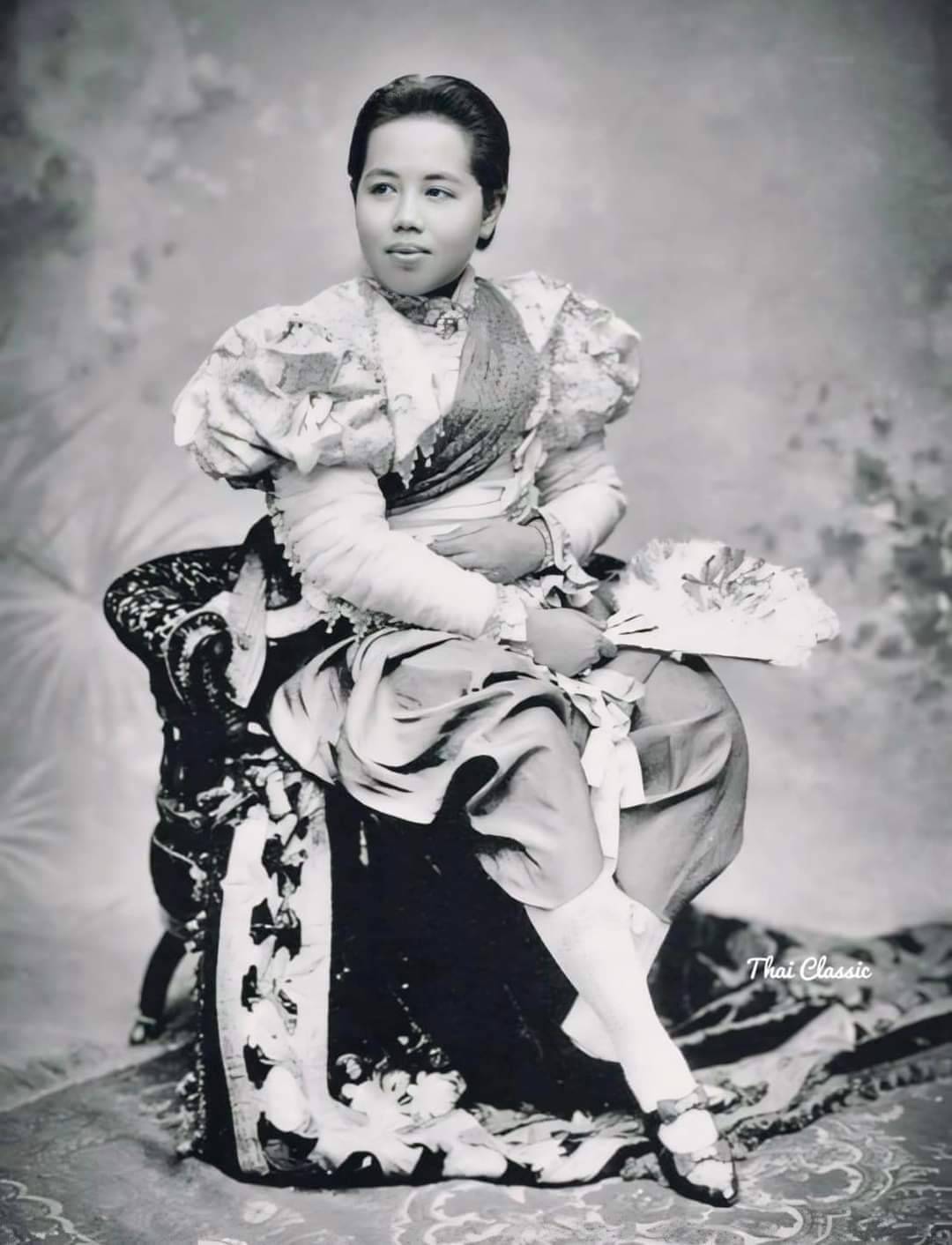
When Princess Rambhai Barni was only two years old, she came under the care and attention of her aunt, H.M. Queen Saovabha Phongsri, grand consort of H.M. King Chulalongkorn (Rama V), with whom she lived at Suan Si Rudu (Four Seasons Garden) Mansion next to Vimanmek and Ambhara Mansions which the King used consecutively as royal residences in the grounds of Dusit Palace. The Queen Aunt was fond of looking after a number of nephews and nieces.
Accompanied His Majesty to reside at Phaya Thai Palace.
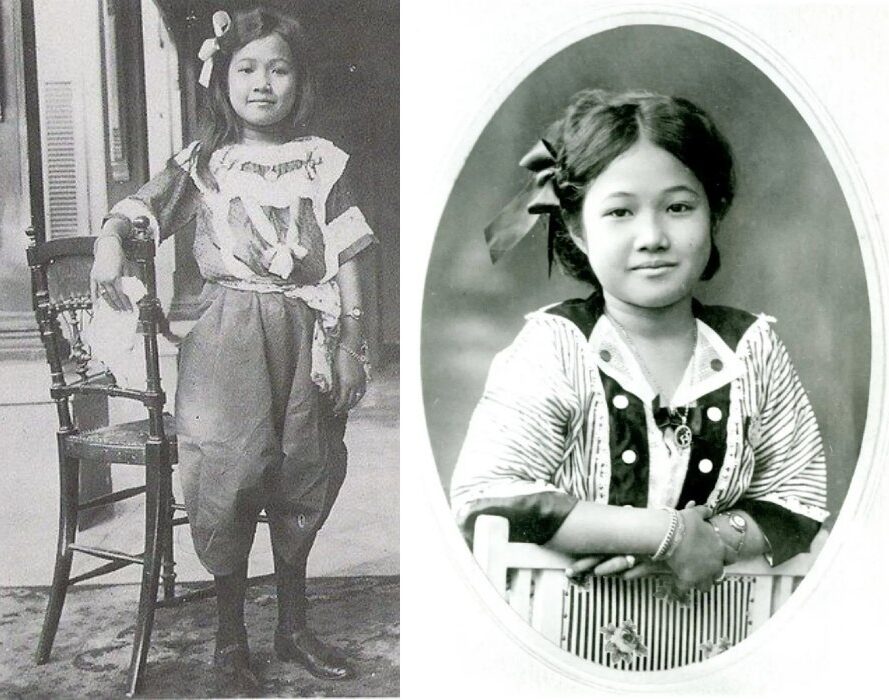
Privately tutored in the Palace when very young, Princess Rambhai Barni was encouraged by the Queen Aunt to speak, read and write correctly and properly. Later, when the Queen resumed residence in the Grand Palace during the cremation rites of H.M. King Chulalongkorn who passed away on October 23, 1910, the six years old Princess moved there with her and attended Rajini School nearby.
After the said ceremony, the Queen Aunt took up permanent residence at Phayathai Palace (now a part of Phra Mongkut Klao Hospital). Princess Rambhai Barni now no longer went to Rajini school as it was considered too far away in those days. She was again tutored at the Palace but went for examinations at the school. In the days when Siam had not yet established a formal education system, the Inner Court was considered the perfect place to socialize young female members of the Royal family and daughters of nobles.
The Queen Aunt saw to it that her young niece was apprenticed in the artistic skills in which the Inner Court excelled, such as sewing and embroidery, flower garland making and fruit carving. The Princess was brought up appropriately to the changing times. While traditionally made ever conscious of her status and dignity as a female royal personage and of Thai customs, she was also introduced to Western knowledge and way of life.
When about eight to nine years old, the Princess accompanied the Queen around the Palace and to formal royal ceremonies, at which times she and a female royal cousin would be given duties of attending to the Queen’s personal and symbolic belongings. By performing such duties, Princess Rambhai Barni learnt by experience how to conduct and compose herself, social skill and mannerisms which became second nature to her throughout her later life.
Royal Hair
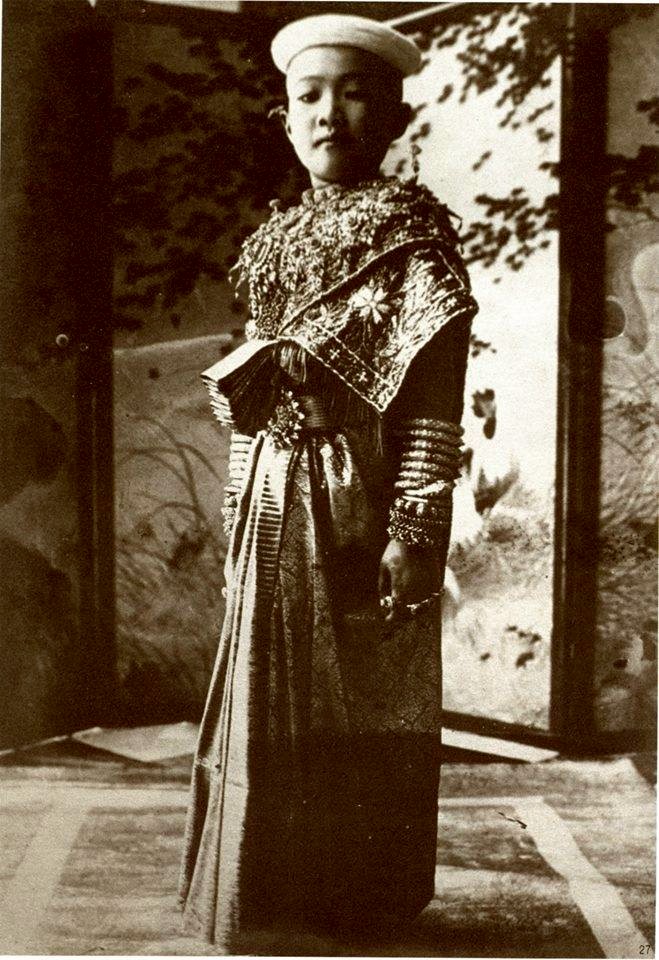
When she was eleven, H.M. King Vajiravudh (Rama VI) ordered a tonsure ceremony (topknot cutting initiation rite) to be held according to custom for Princess Rambhai Barni and her cousin. H.M. Queen Saovabha Phongsri personally supervised the preparations and gave her royal niece emerald and gold ornaments to wear on the occasion.
Courtship and Marriage
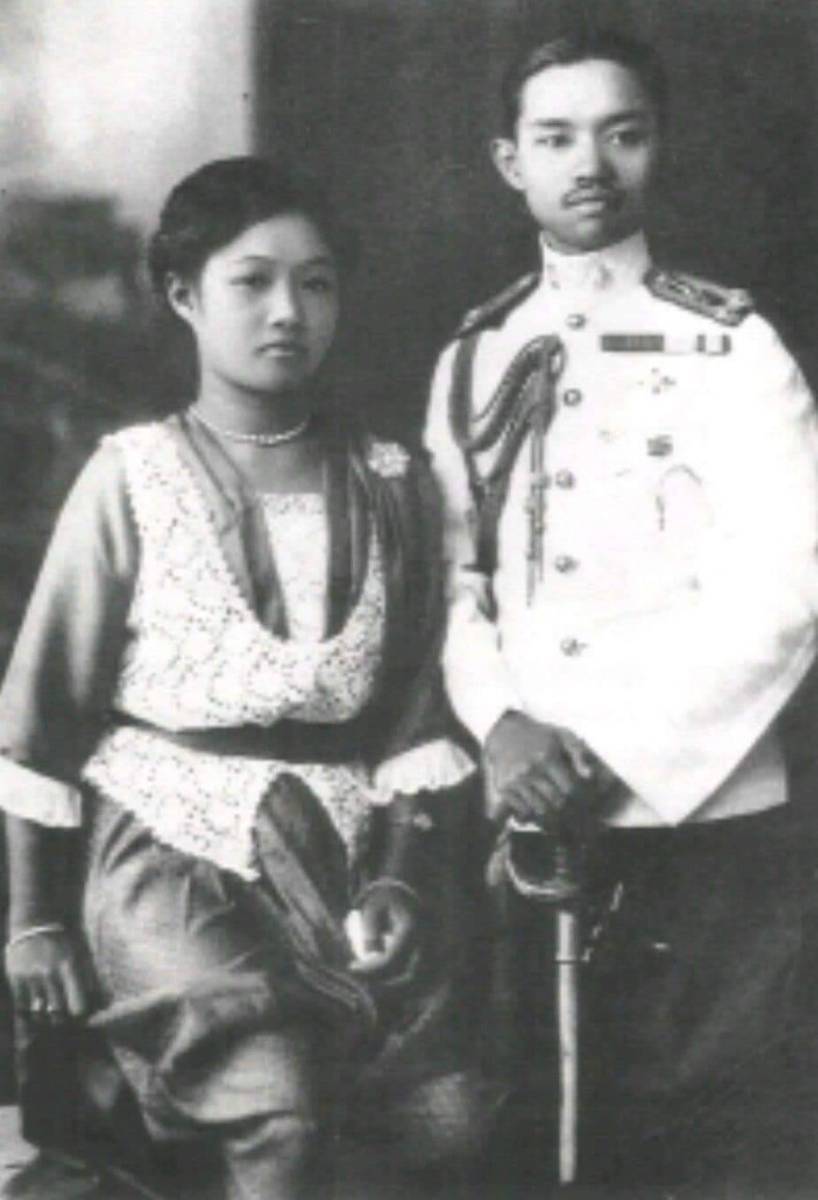
In 1914, H.R.H. Prince Prajadhipok, the youngest son of the Queen Aunt, returned from his studies in the United Kingdom to serve in the Siamese Army. He always went to see his mother and extended his kindness to his young relatives in the Palace, both boys and girls. Among these was Princess Rambhai Barni whose gentle and civil manner but resolute disposition, as well as exceptional beauty, attracted his attention. It developed into fondness and love.
After a customary time in the Buddhist monkhood, H.R.H. Prince Prajadhipok in 1918 decided to pen a letter seeking H.M. King Rama VI’s permission to marry Princess Rambhai Barni.
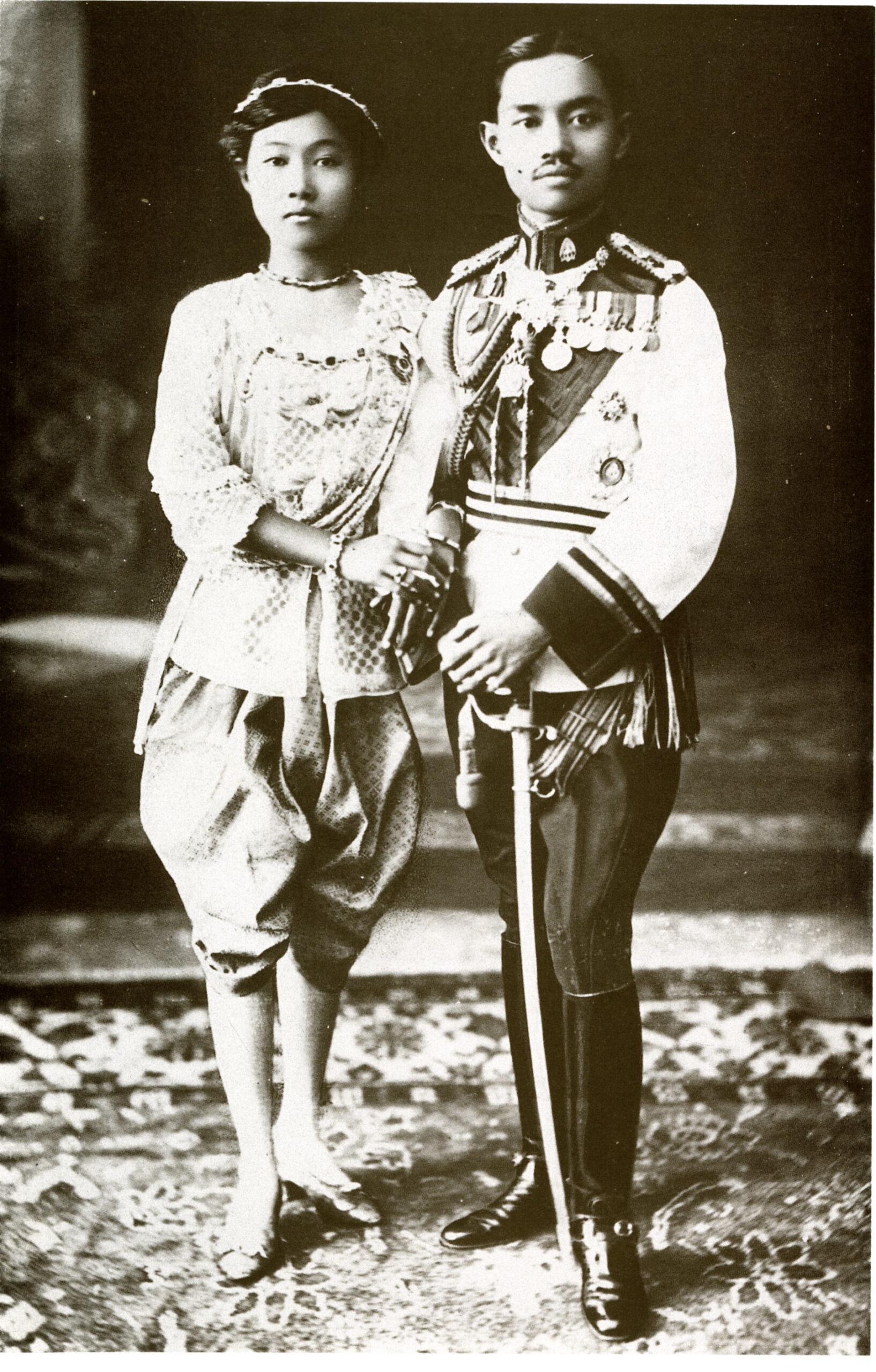
The Royal Wedding Ceremony at Warophat Phiman Throne Hall, Bang Pa-In Palace.
Readily granting royal permission, the King graciously presided over the wedding ceremony at Varobhas Piman Mansion, Bang-Pa-In Palace near Ayudhya, on Monday, August 26, 1918 at 2.00 p.m.
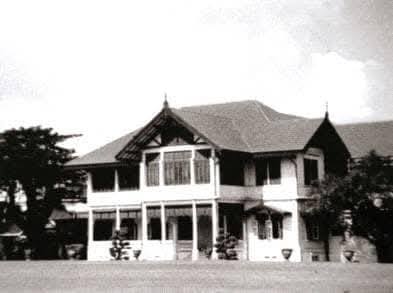
Wedded, the royal couple took up residence at Sukhodaya Palace, newly built by Samsen Canal on land the King gave them.
Life together at Sukhodaya Palace
After their royal wedding, Their Royal Highnesses took up residence at Sukhothai Palace, newly built on royally granted land along the Samsen Canal.
At the Prince’s side in France
In January 1921, the couple left for France to have the Prince’s lingering health problems diagnosed. In Paris, the Prince had his health checked and after 5 – 6 weeks’ treatment recovered well enough to pursue higher military training at L’Ecole de Guerre Staff Academy.
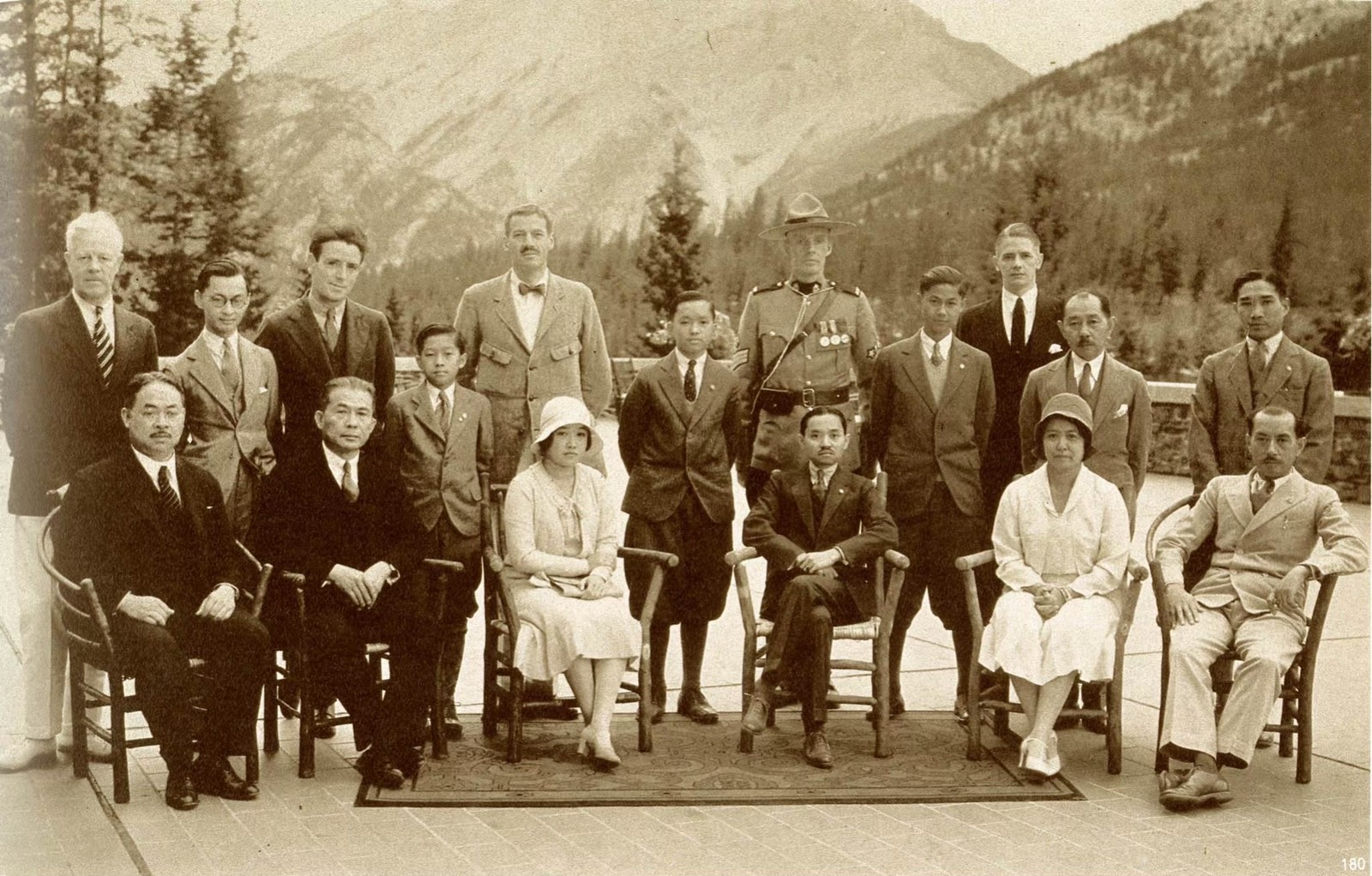
During their three years in France the Princess was ever at the Prince’s side ‘in sickness and in health’ in an environment not familiar to her for she had never been abroad. However, she was able to overcome the inconveniences and difficulties she faced without troubling the Prince. Having finished his training, the Prince and the Princess left Paris in September 1924 for a tour of the USA and Japan before arriving in Bangkok in December.
สมเด็จพระนางเจ้ารำไพพรรณี พระบรมราชินี
Within a few months, the Prince unpreparedly found himself heir to the throne. Then, on November 26, 1925, H.M. King Vajiravudh (Rama VI) passed away and H.R.H. Prince Prajadhipok, the Prince of Sukhodaya, suddenly had to ascend the throne. He was to pen in July the next year :
“For myself, I was a dark horse and in any case inexperienced in affairs of state”
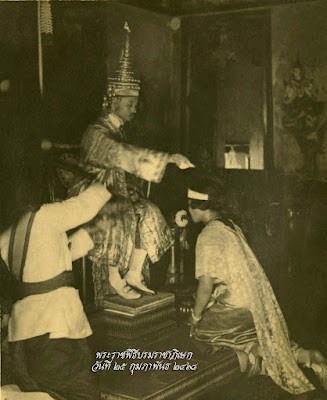
At the Coronation of H.M. King Prajadhipok as Rama VII of the Chakri (Bangkok) Dynasty on February 25, 1926, the King ordered an addition to the otherwise customary proceedings of a part to raise M.C. Rambhai Barni, his sole consort, to sovereign rank. This was the first time in the Bangkok period for there to be an investiture of a queen at the coronation.
คู่พระบารมีอาทรราษฎร์
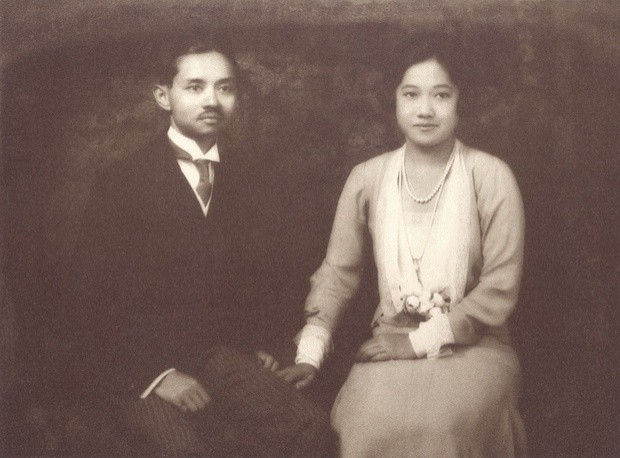
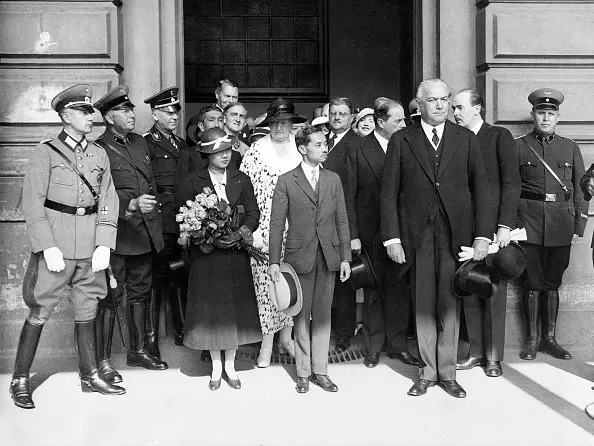
Their Majesties went everywhere together, to ceremonies, upcountry and abroad, in the way that Kings and Queens in the West did. Though this practice began in the Fifth Reign, it became normalized during the Seventh Reign. It can be surmised that this was a policy decision H.M. King Prajadhipok made in order to show to the public that he accepted and adopted the modern way of having only one wife. He accorded his sole consort with the dignity of always appearing in public with him. This became the norm to the present day.
การเสด็จพระราชดำเนินในประเทศ
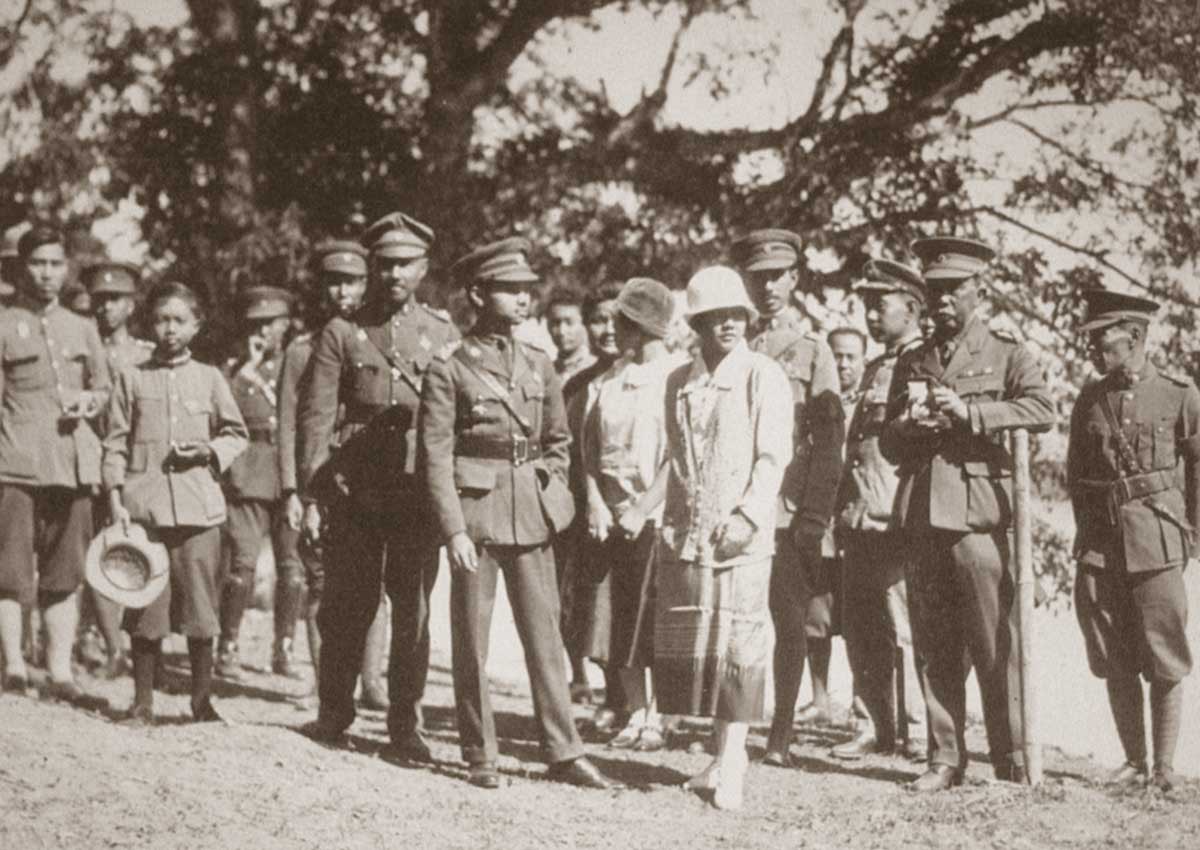
On their sojourns to the far flung provinces, Their Majesties always carried out their duties as a couple.
การเสด็จพระราชดำเนินเยือนต่างประเทศ
H.M. Queen Rambhai Barni accompanied the King on all occasions as Queen of Siam. She prepared herself well for doing so by studying the itineraries, the diplomatic conventions and each of the countries’ customs and places of interest. She also prepared her wardrobe of appropriate garments such that she appeared not only beautiful but also smart and modern. Having been exposed to life in France, she composed herself as appropriate on all occasions, These visits therefore proceeded smoothly and succeeded in making Siam’s presence felt abroad.
สวนไกลกังวล : รำไพสถานชายทะเล
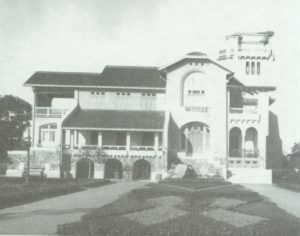
The King had a palace built for his Consort in an adapted Spanish style and named it simply ‘Suan Klai Kangvol’ or ‘Far From Care Garden’. Their Majesties liked to find time between their various engagements to stay at Suan Klai Kangvol.
Political waves
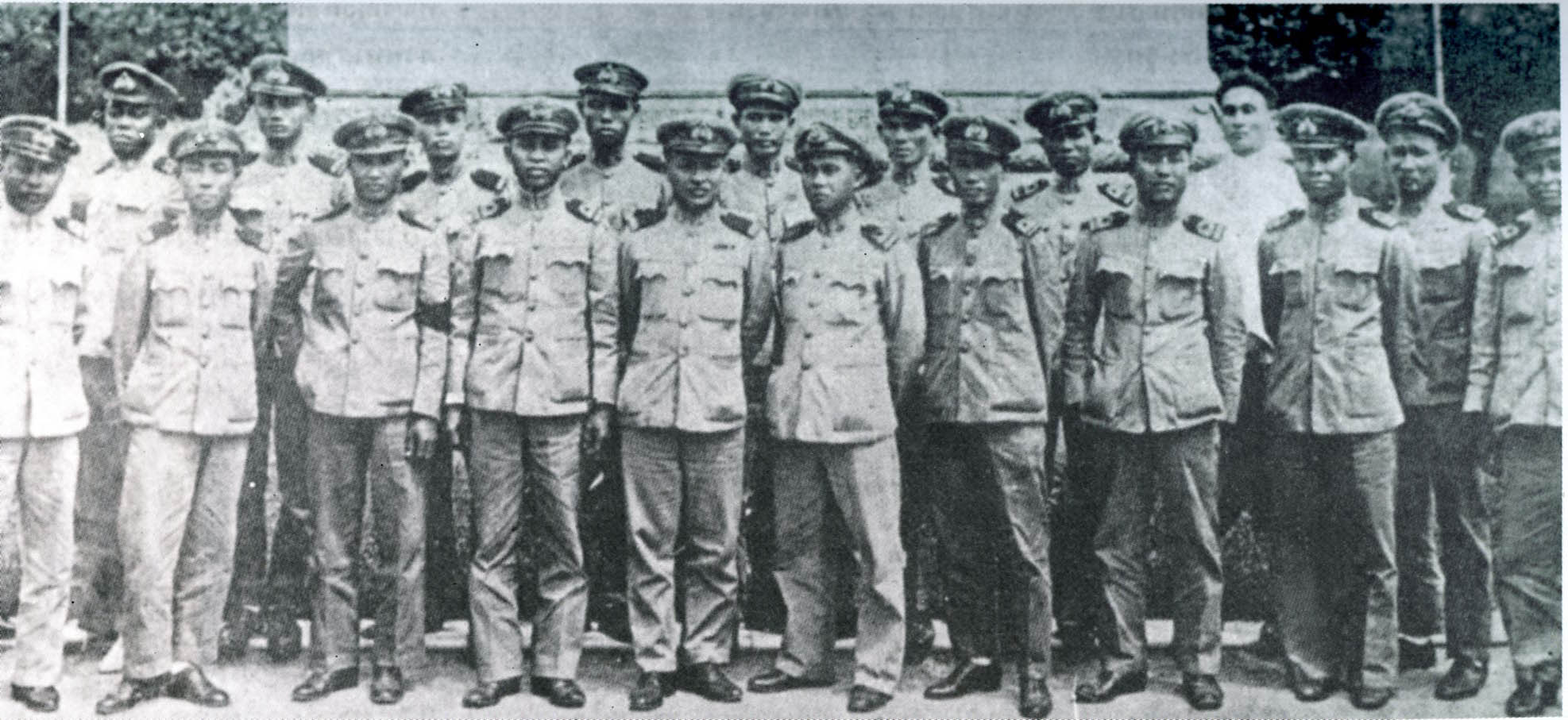
in the early morning of June 24, 1932 that Their Majesties received news of a coup in Bangkok to end the Absolute Monarchy. Both were determined to return to Bangkok and face the consequences. H.M. Queen Rambhai Barni was only 28 years old at the time.
Just over a year later, H.R.H. Prince Bowaradet, and his troops rose against the coup group’s government. The Queen was to recount : “(The King) remained neutral and did not take sides.
Then we heard that Colonel Luang Pibul was sending a train for us. The King was adamant not to return to Bangkok. We left for Songkla.
When asked later about her feeling at the time, H.M. Queen Rambhai Barni replied;
“I didn’t think or feel anything. If we should die, we would die together.”
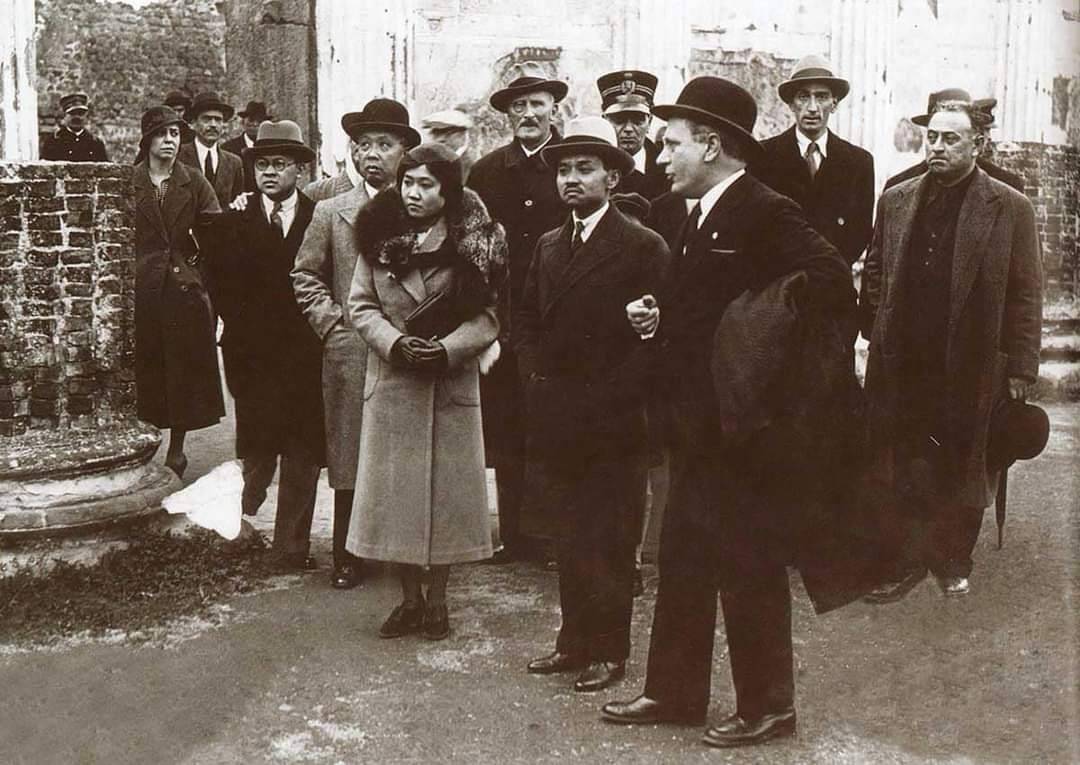
The King, accompanied as always by the Queen, left for Europe as a Constitutional Monarch. No other Queen Consort of Siam had been to Europe before then. H.M. Queen Rambhai Barni’s exceptional beauty, engaging smile and composed demeanour, the modern outfits she wore, replete with fashionable hats, together with her ability to speak English and French beautifully, conveyed to all an impression of a modern queen from the Orient abroad.
Ever loyal despite change in royal status
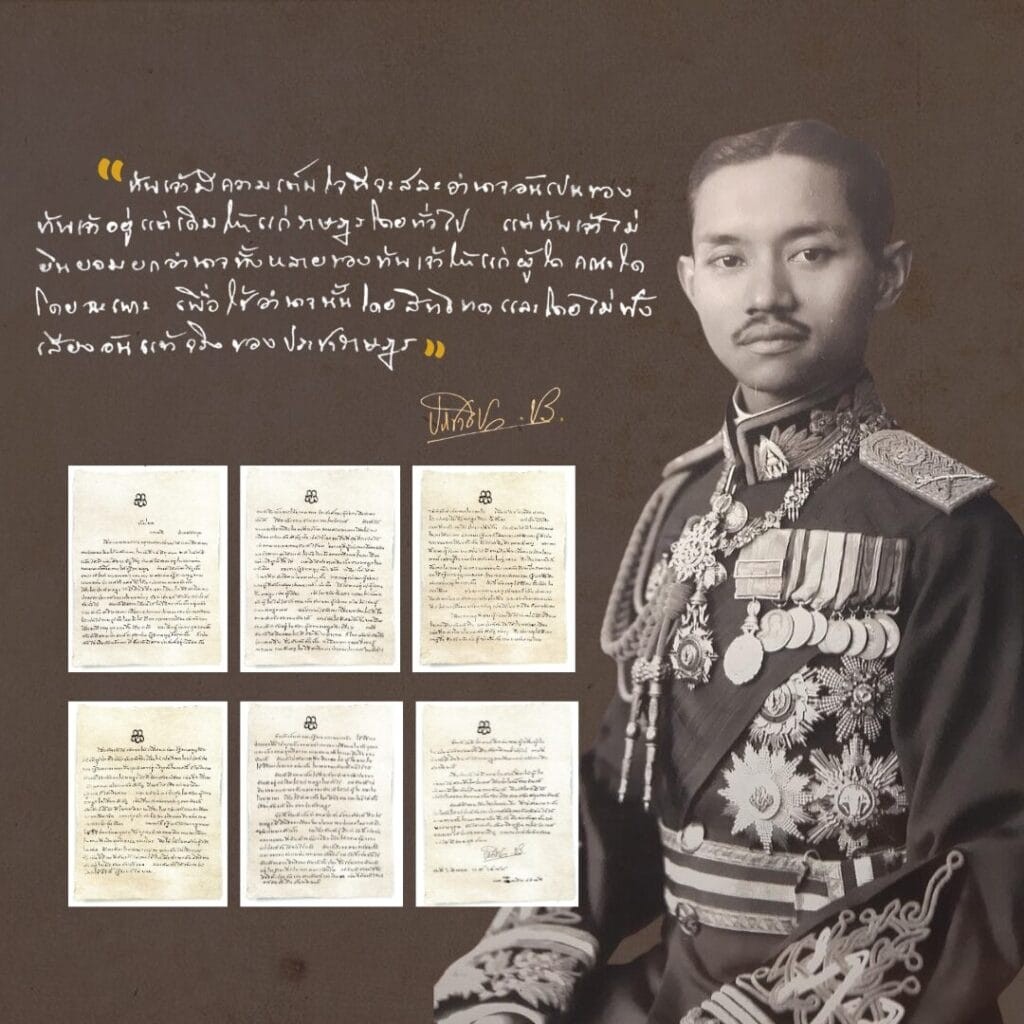
The King entered into negotiations with a delegation sent from Siam by the government in response to His Majesty’s objections to many of the ways in which the government was administering the country. On March 2, 1935, H.M. King Prajadhipok decided that there was no recourse but for him to abdicate the throne . H.M. Queen Rambhai Barni once recounted that she concurred with the King in his decision to abdicate. She was ever ready to continue to be at his side despite his changed status. As the King reverted to his former title of H.R.H. the Prince of Sukhodaya, his Consort automatically became known as H.R.H. the Princess of Sukhodaya
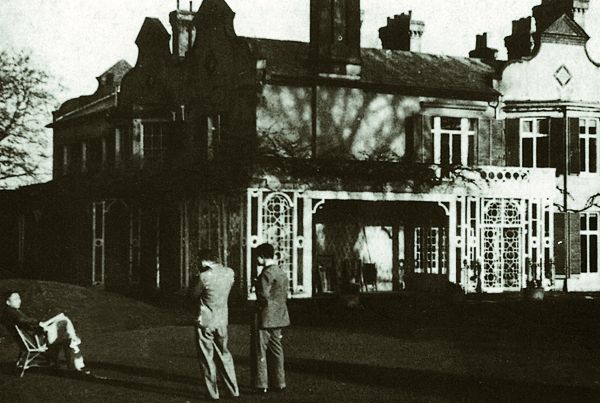
พระตำหนักโนล
ตั้งอยู่ที่ตำบลแครนลี (Cranleigh) จังหวัดเซอร์เร่ย์ (Surrey) ใกล้เมืองกิลด์ฟอร์ด (Guildford) ห่างจากกรุงลอนดอน 35 ไมล์ เมื่อพระบาทสมเด็จพระปกเกล้าเจ้าอยู่หัวทรงสละราชสมบัติ ข้าราชบริพารที่เป็นข้าราชการได้ถูกเรียกกลับประเทศหมด เหลือแต่พระญาติและข้าราชบริพารในพระองค์ไม่กี่คน
จึงทรงย้ายที่ประทับจากพระตำหนักโนล ไปประทับที่พระตำหนักใหม่ซึ่งมีขนาดย่อมกว่า
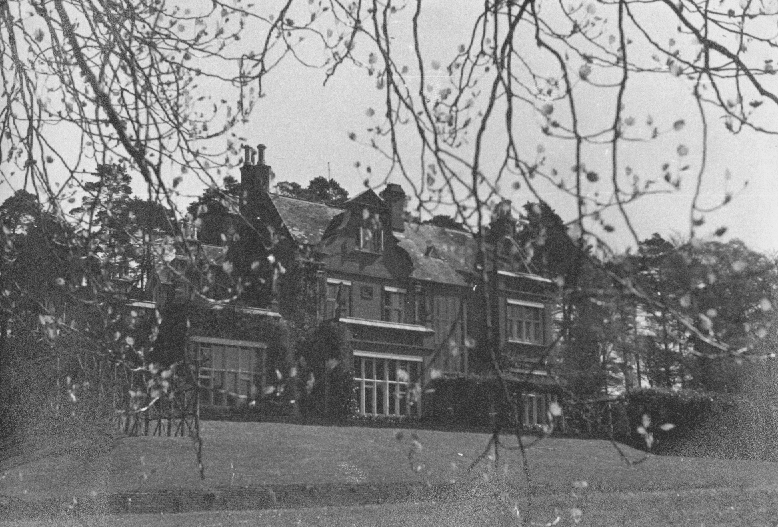
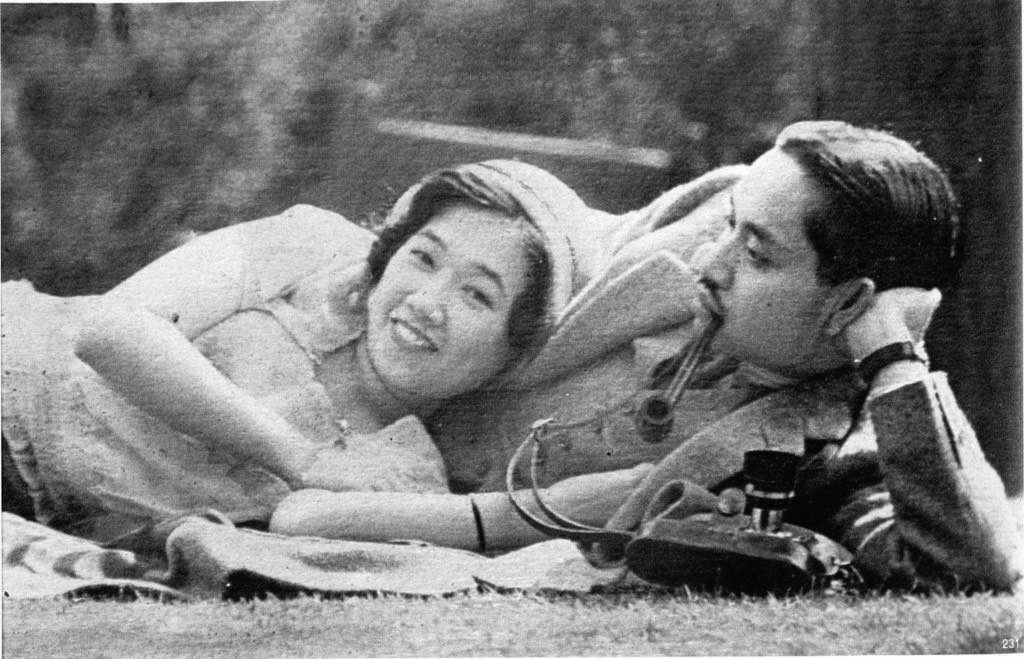
พระตำหนักเกลน แพ็มเมิ่นต์ (Glen Pammant) “ตามเพลงมัน” (Tam Plengman) “แล้วแต่อะไรจะเกิดขึ้น”
Their Majesties moved to Virginia Water, also in Surrey, to a smaller but still large house they bought. The King named it ‘Glen Pammant’, devised from as anagram of a saying in Siamese, ‘Tam Pleng Man’, which means whatever will be will be. They lived there for two years.
Given this idyllic setting, the royal couple had the opportunity to engage in their joint passion for gardening and horticulture as well as to have regular exercise by playing tennis and walking the dogs.
After two years they sold Glen Pammant and moved to a new house they bought in Kent. Today, Glen Pammant is divided into two private houses, called Greywell Court and Greywell House.
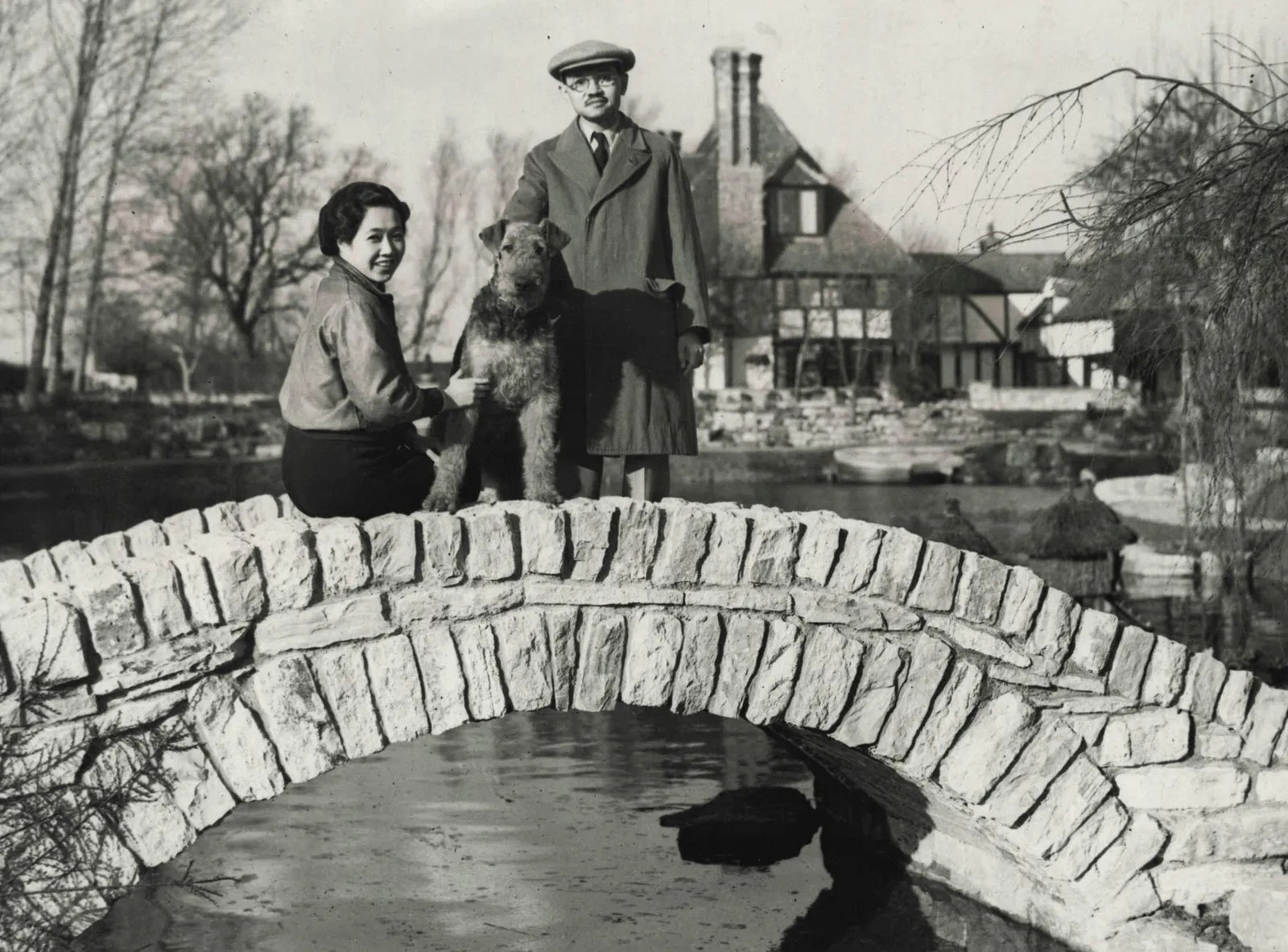
ณ พระตำหนักเวนคอร์ต (Vane Court)
The new house Their Majesties moved in to in September 1937 was less spacious than Glen Pamment. The Tudor manor in the village of Biddenden, known for its ‘Bidden Sisters’ Siamese twins, near Ashford, Kent, was to become their favourite abode while in England. It had a beautiful garden and an orchard. Emblematic was an arched stone bridge over a pond in which ducks and fish swam. The King grew carnations in the greenhouse and the Queen picked them for flower arrangements.
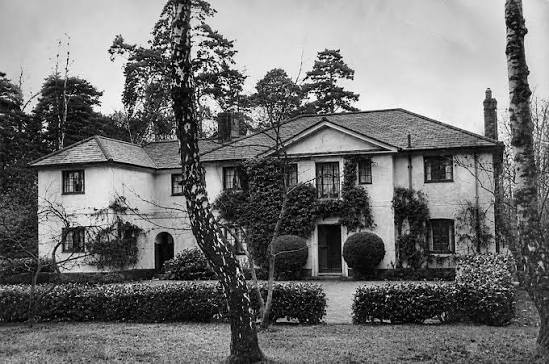
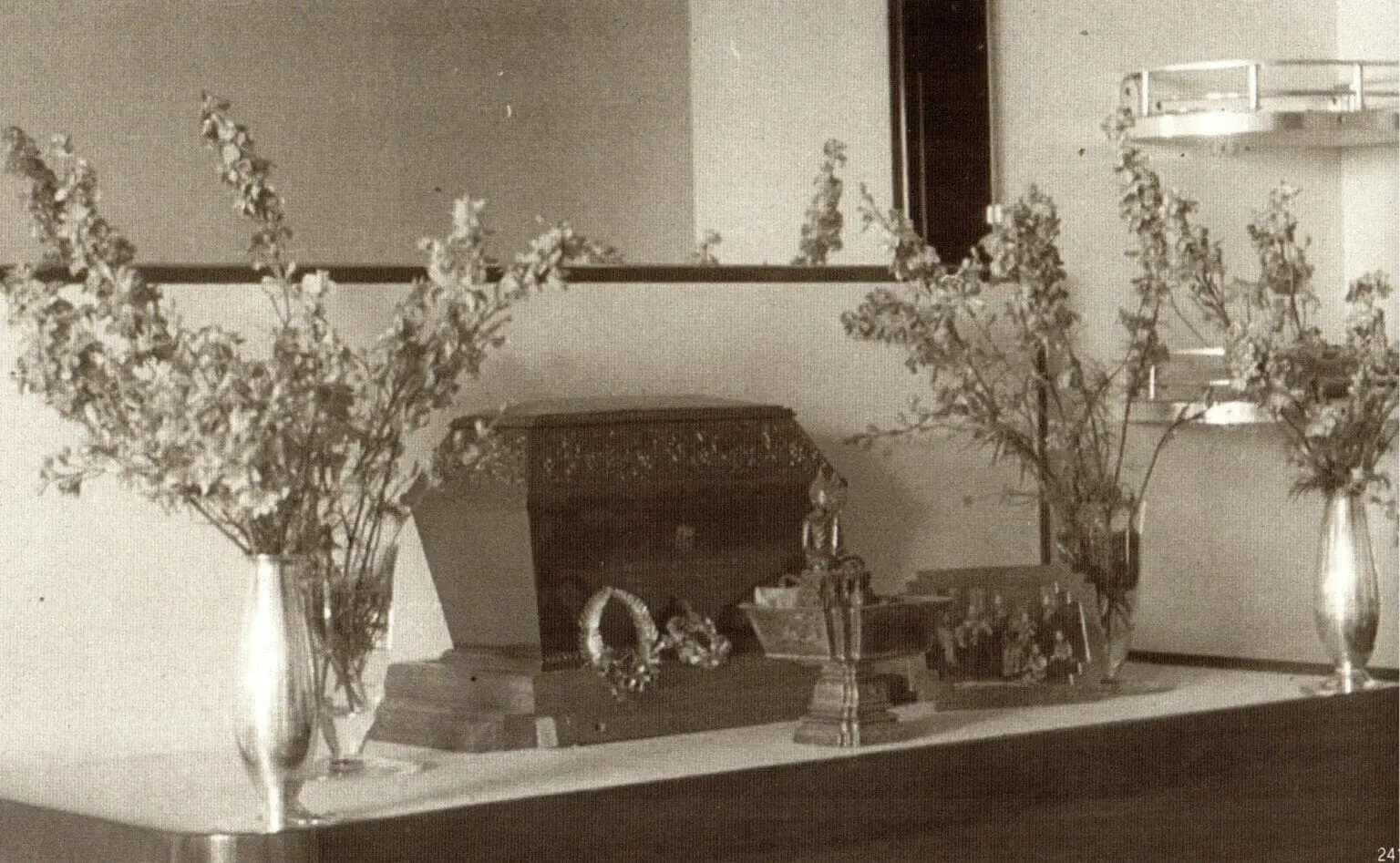
พระตำหนักคอมพ์ตันเฮาส์ (Compton House)
พระราชสวามีเสด็จสวรรคต
Their Majesties moved to this Georgian style house in Wentworth Estate, Virginia Water, Surrey in September 1939. The royal couple were on food and petrol rations like everybody else. By mid-1940, Germany had captured Paris and German bombings on Britain were expected. The King moved his family to a village in Devon. They stayed there for a few months before moving again, to a suite in Lake Vyrnwy Hotel in the barren hills of North Wales. There, the Queen spent time knitting while the King went for walks in the hills taking photographs, his favourite pastime. He had become very frail and suffered greatly from a heart complaint. No amount of nursing and bemusing by the Queen could sufficiently alleviate his pains. One day, the ailing King said : “If I were to die, let me die in my own home rather than in this hotel.”
On May 30, 1941, H.M. King Prajadhipok woke early and said to his beloved :
“ I feel much better today. Do go to Vane Court and bring back some flowers.”
H.M. Queen Rambhai Barni left by car. On the way near Maidstone she was intercepted by a policeman who told her that the King had passed away of a heart attack, peacefully in his bed.
Upon the Queen’s arrival at Compton House, M.C. Karawik Chakrabandhu, a close aide, went to her side. He felt:
“Her Majesty could marvelously control her emotions and her nerves in the midst of weeping people around her.”
On June 3, as the hearse left Compton House for Golder’s Green Crematorium in North London, the Queen standing by the window could no longer hold back her tears.
She said :
“They have taken him away.”
Widowed at 37, H.M. Queen Rambhai Barni’s devotion for and loyalty to her deceased husband never waned as she resolutely faced what was in store for her in her life. She lived on at Compton House.
น้ำพระทัยยามสงคราม
Six months later, on December 7, 1940, Japan bombed the American naval base at Pearl Harbour, Hawaii, without declaring war. Japanese troops occupied Thailand. On January 25, 1941 the Thai government joined Japan in declaring War against the Allies.
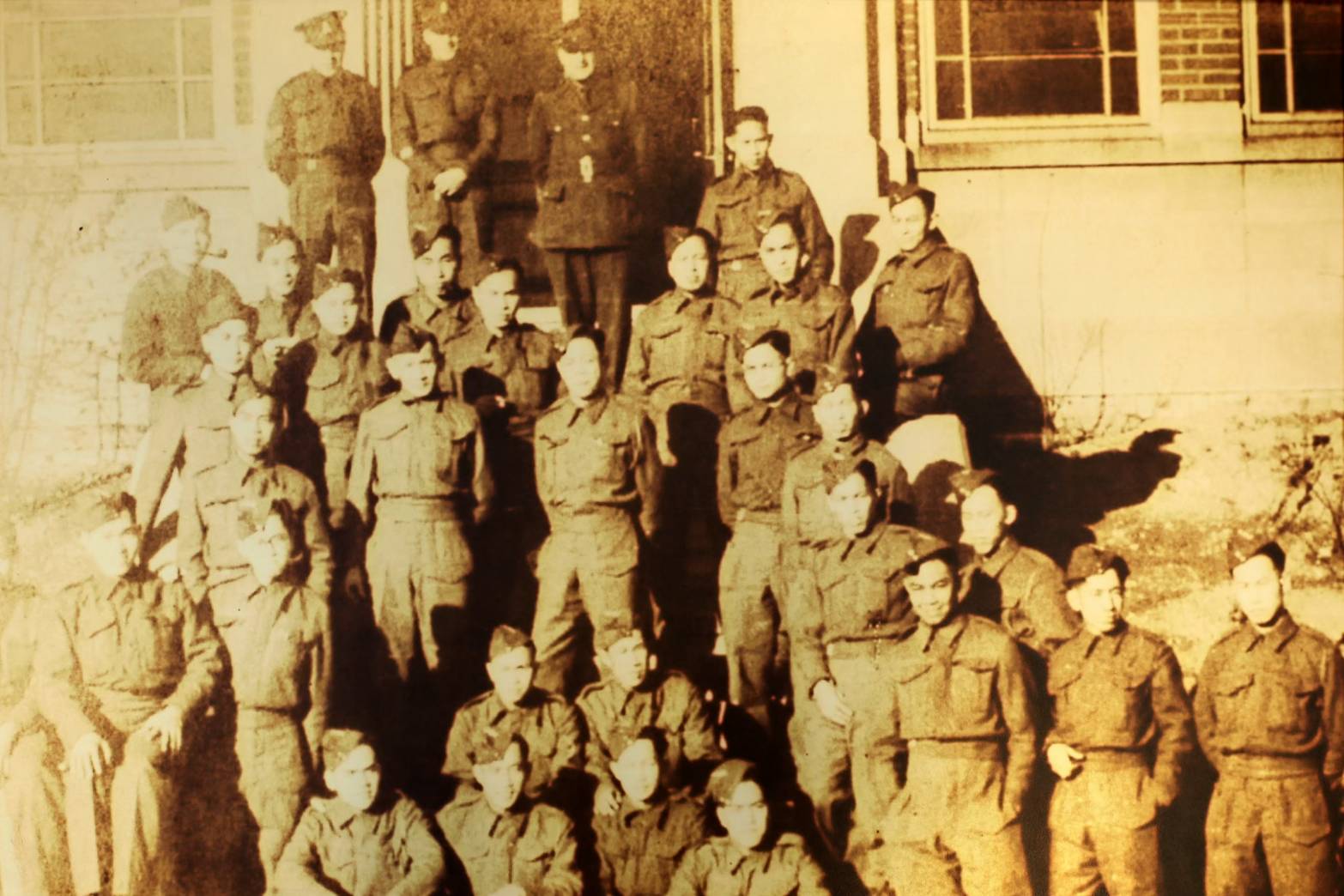
Thais in the USA and Britain immediately became enemy aliens. However, contingents of Thais in both countries disagreed with and refused to follow government orders to return home and established the Free Thai Movement to resist Japan and safeguard Thai sovereignty.
“Go and fight. If I were a man, I would go too. But I am a woman; so I’ll stay here. Don’t worry about me. Go and do your duty”, the Queen said to M.C. Karawik when he sought her approval to join the British Army to carry out Free Thai activities.
In fact, she braved the bombs, together with her female relatives, by traveling to London, to the Headquarters of Saint John’s Ambulance once or twice a week to prepare medical provisions. Of this the Queen said:
“I went to help the ‘Red Cross’ … informally … It was quite frightening…”
Once again she showed her daring when necessity called for it. The British contingent of the
Free Thai thus accorded her the honour of also being a war veteran.
Returning to Thailand in 1947, Mom Manee Bhanubhandu went to see H.M. Queen Rambhai Barni and queried her as to whether she was considering returning home.
The Queen replied that she had the idea in mind because it was costly living in England and her funds might not last. In any case, Britain, though hospitable, was not her homeland. If she were to be able to return to Thailand, she could do some good in social welfare or for the religion.
She then went on to say that if the Thai government should formally ask her to return with the Relics of H.M. King Prajadhipok in full honours of a crowned King, she would do so. Otherwise, she would rather endure staying in a foreign land.
H.M. Queen Rambhai Barni held H.M. King Prajadhipok’s honour high above all else.
The next year, the Pibul cabinet and the National Assembly concurred with the advice given by H.R.H. Prince Rangsit of Chainat, the Chair of the Council of Regents, to beseech H.M. Queen Rambhai Barni to return to Thailand and to bring H.M. King Prajadhipok’s Relics with her. They also reinstated them to their former majestic statuses. The Queen henceforth became known as H.M. Queen Rambhai Barni of the Seventh Reign.
The Queen was satisfied and agreed to return home. She expressed her concern that the journey should be as economical as possible. Her frugality with state funds was so in keeping with her royal husband’s.
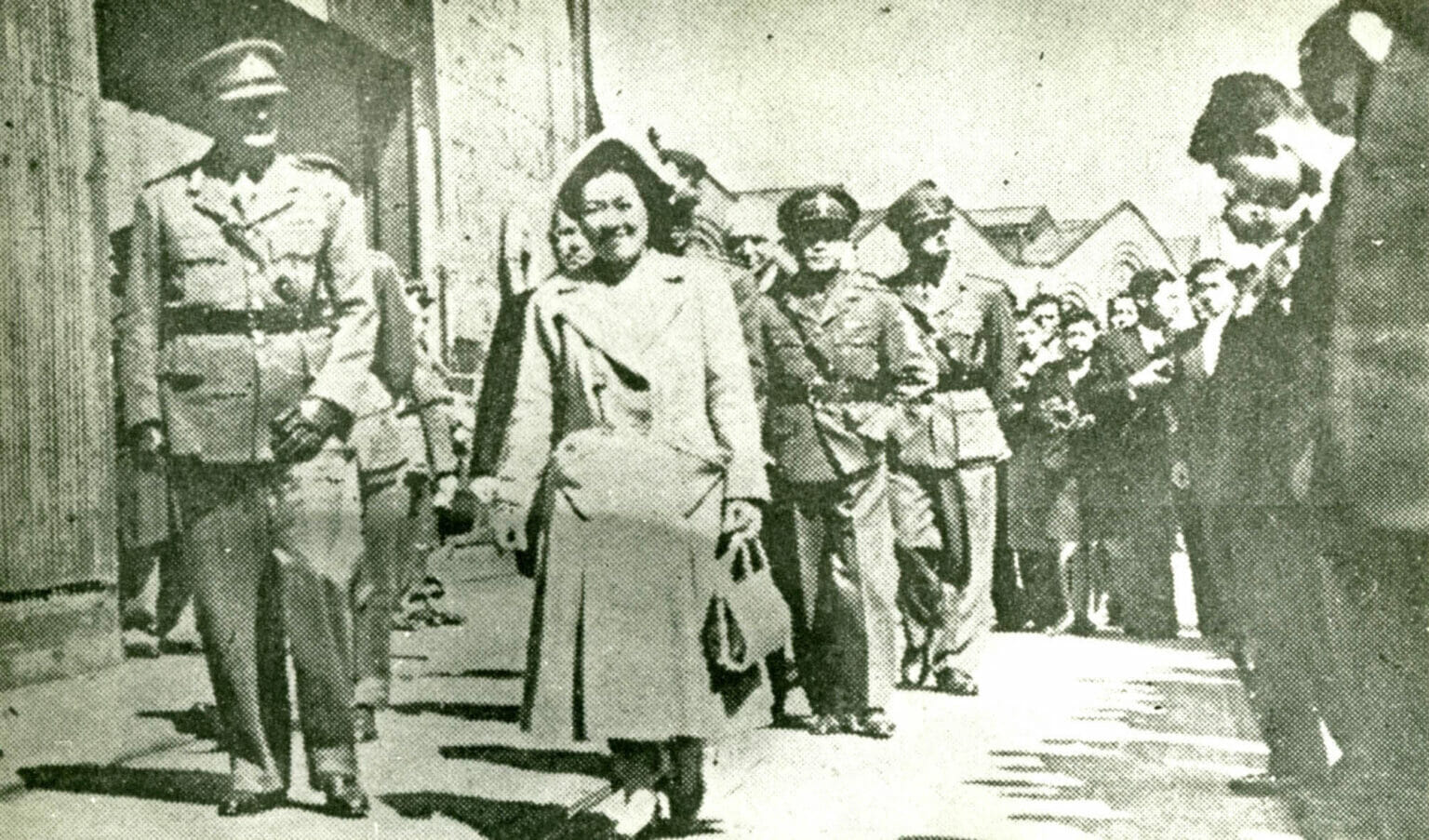
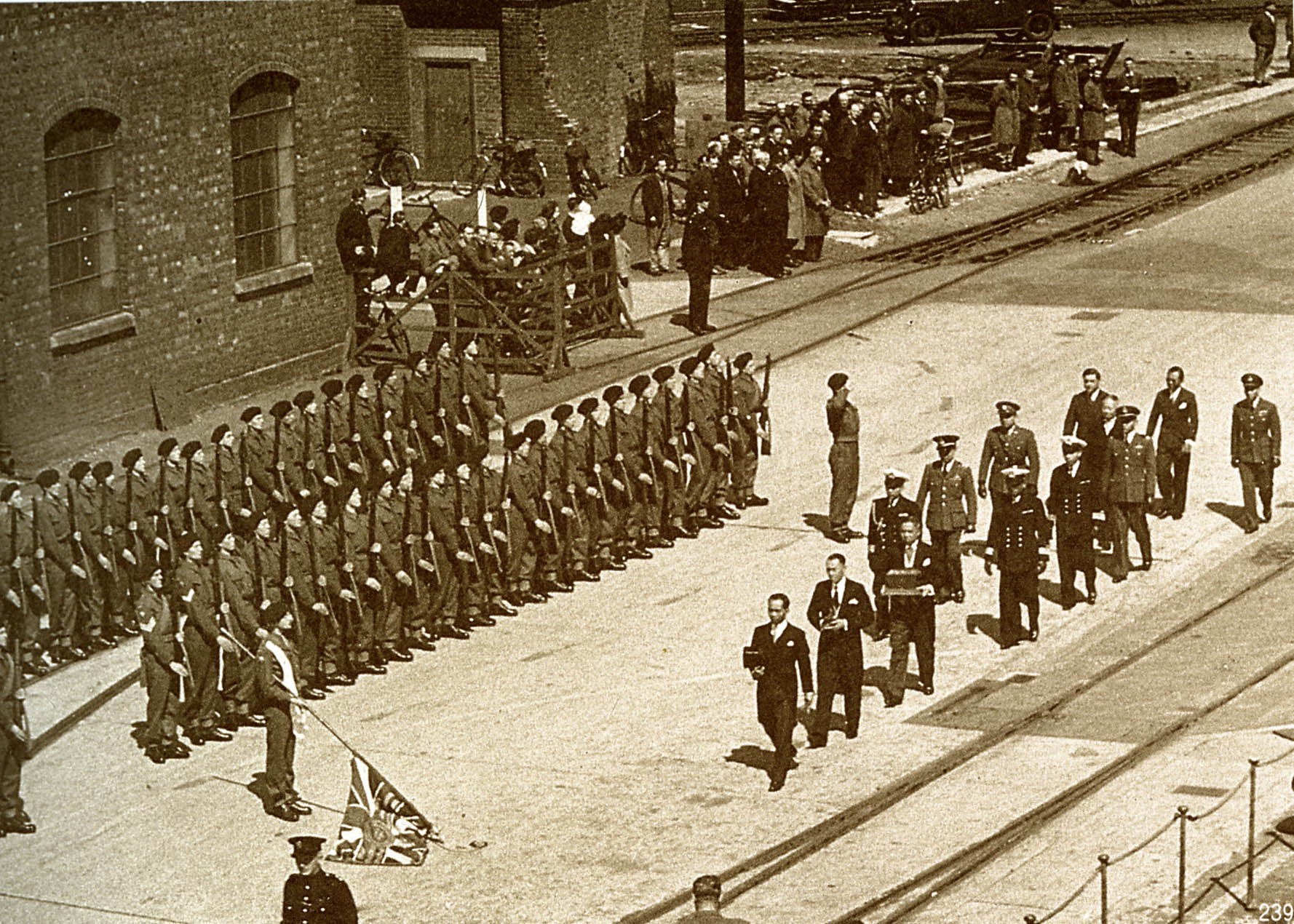
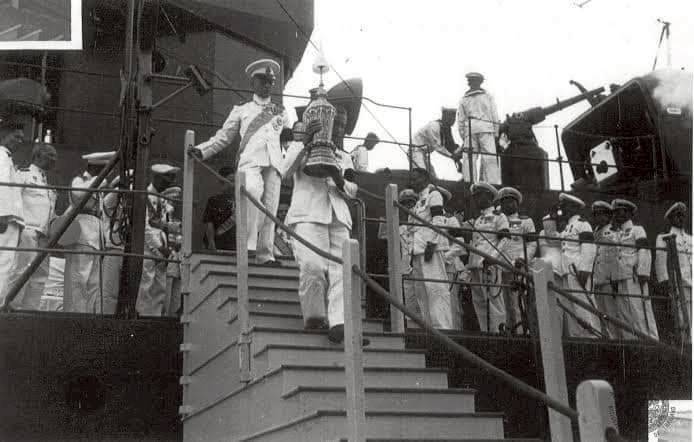
The Queen left Compton House on May 1, 1949 for Southampton Docks. There, a procession carrying the Reliquary, comprising of the Thai Ambassador, military and civil officials as well as relatives and retainers, proceeded past the Honour Guard of soldiers from the Salisbury Military District to board the Wilhelm Ruys liner of the Royal Rotterdam Lloyd Company. The Thai Royal Anthem was played, bringing tears to the eyes of those Thais present who had not heard it for a long time. The Thai Royal Ensign was raised on the ship’s mast once the Reliquary was on board.
ประทับ ณ วังสระปทุมก่อนเสด็จฯ ไปสวนบ้านแก้ว
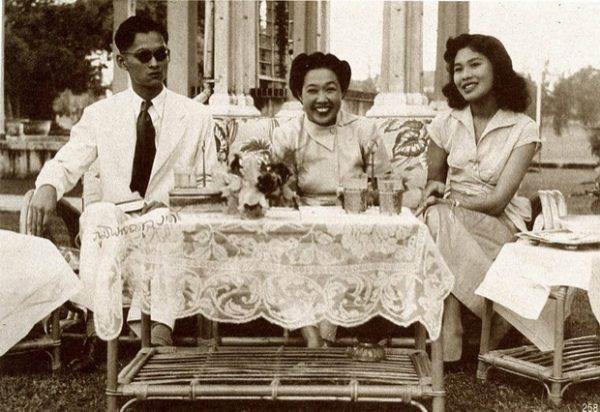
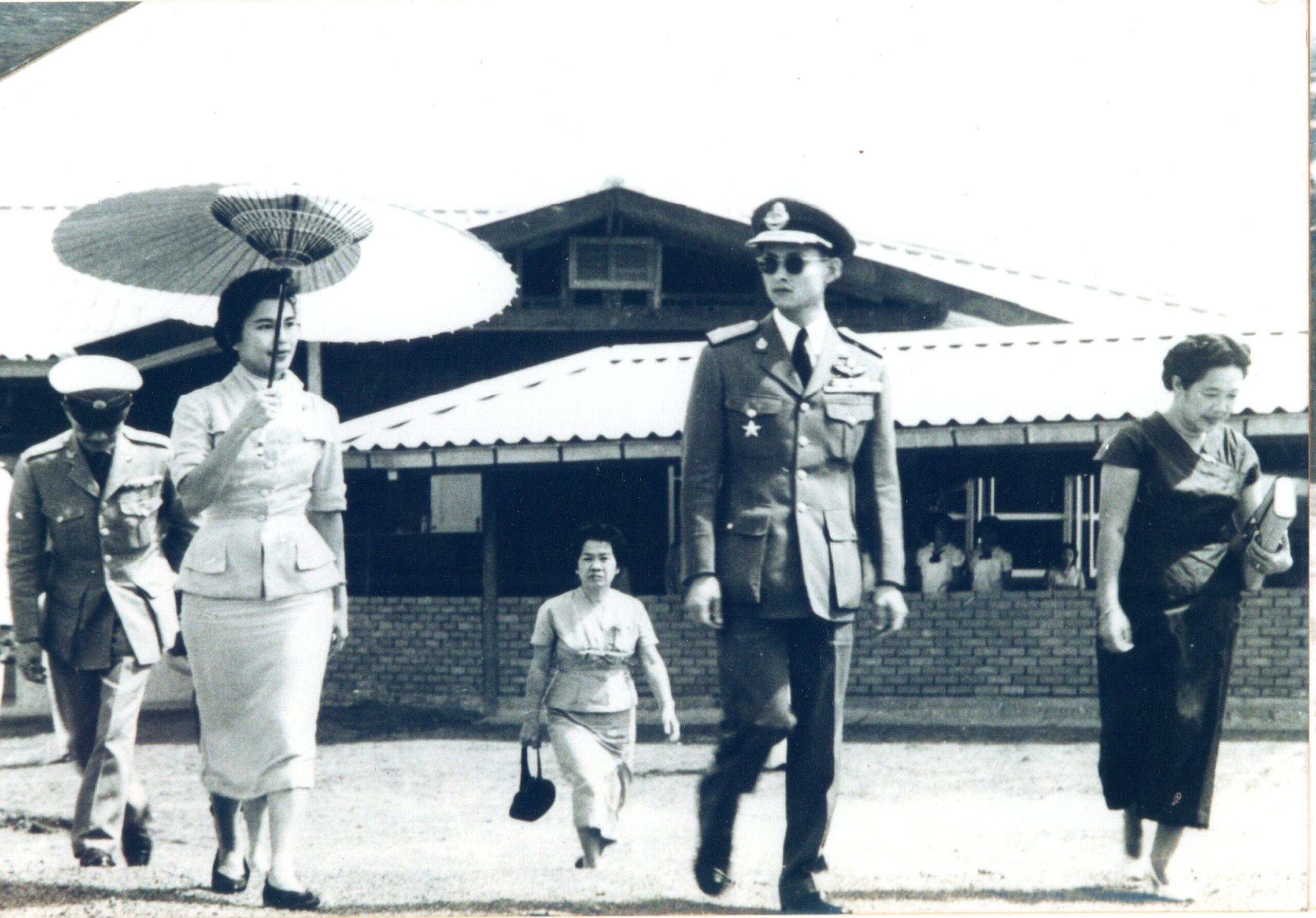
H.M. Queen Rambhai Barni went to stay at Sra Pathum Palace at the kind invitation of H.R.H. the Princess Mother to H.M. King Bhumibol Adulyadej. This was because Sukhodaya Palace was being used by the Ministry of Public Health at the time. It was to be repaired for the Queen’s use for the rest of her life once the Ministry had moved out.
In those days when the Queen ventured to Chantaburi, it took a whole day to travel there because of the dirt road. The tract of land the Queen decided upon was 5 kms. from Chantaburi town, on a slope mostly of wild grass and clumps of trees from where wild animals, including tigers and deer, would sometimes emerge.
However, the sloping piece of land with the natural ‘Ban Kaew’ stream crossing it afforded irrigation possibilities. The scenic and tranquil nature of the place also made the Queen decide to seek a bank loan to buy some 700 rais of land from villagers.
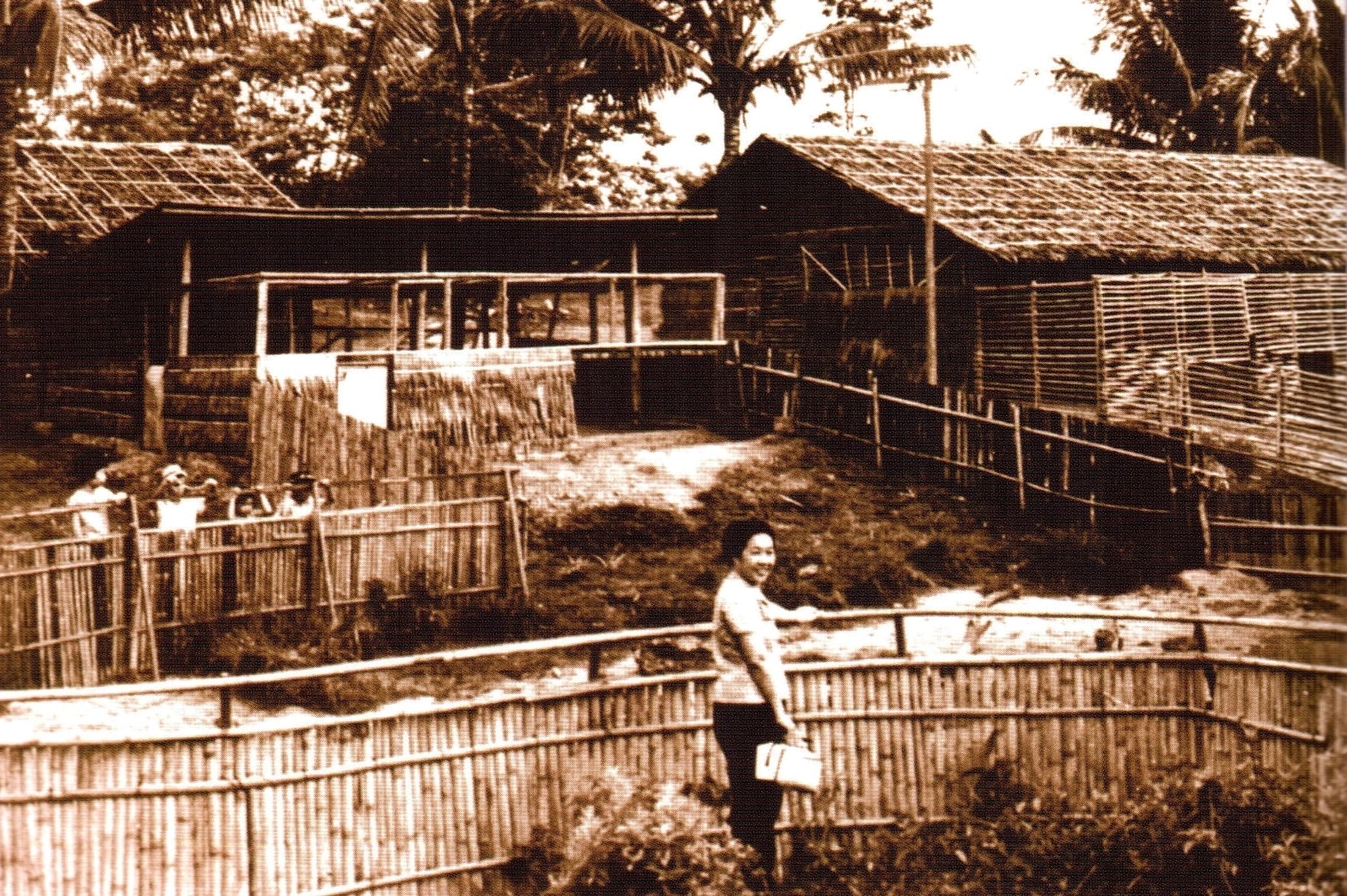
The Queen named the place simply ‘Suan Ban Kaew’ orchard. Temporary simple accommodation was built. There was no electricity or running water. They used water from the canal.
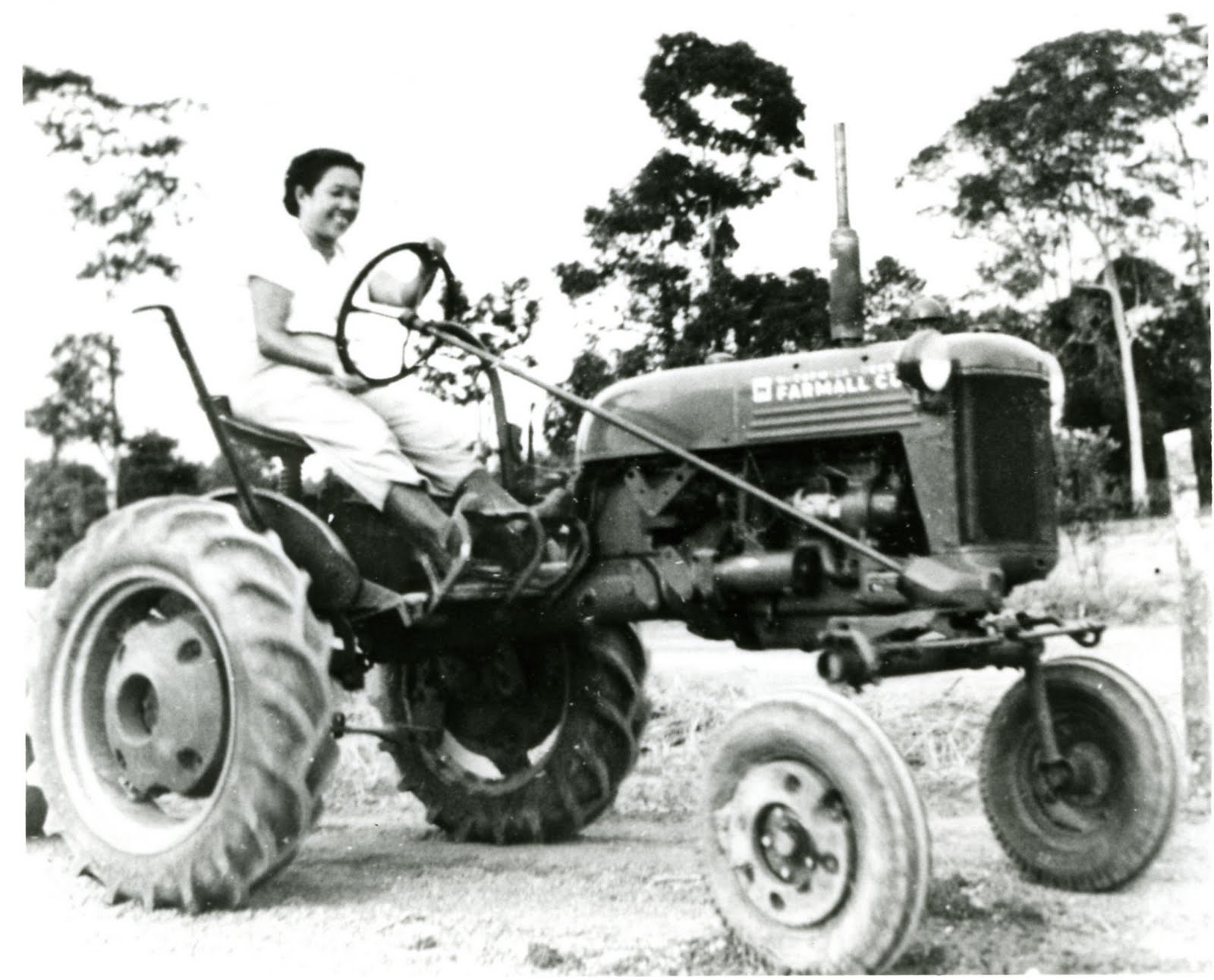
The Queen, visiting under such conditions, sometimes mounted the tractor, sowed and harvested the rice, and picked the peanuts grown to put nitrogen into the soil.
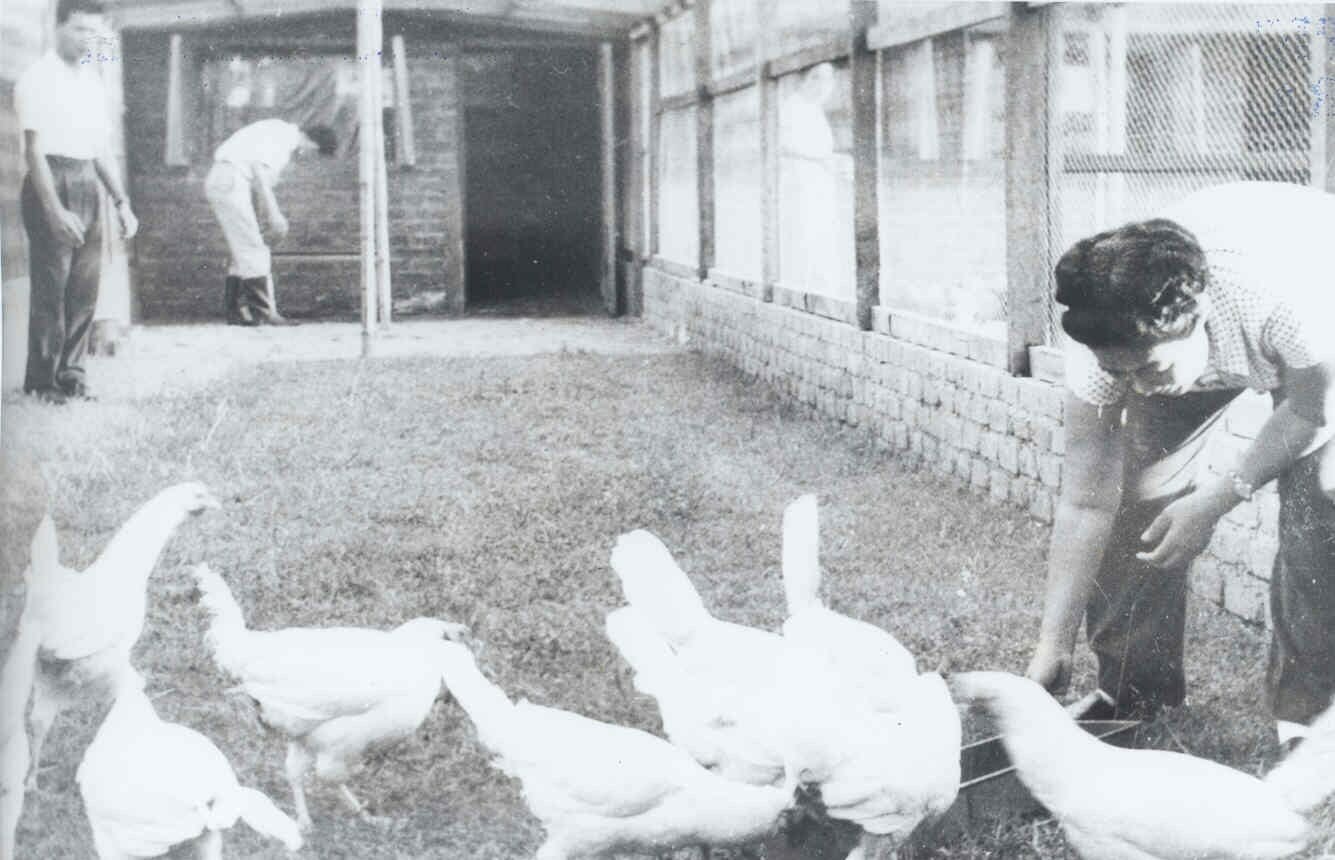
The Queen’s idea was to be self-sufficient in foodstuffs. They should not produce too much for sale for that would be competing with the locals, she said. Any surplus was sent to Sukhodaya Palace for her relatives and retainers in Bangkok.
All in all, H.M. Queen Rambhai Barni began experimental farming, to pass knowledge on to local villagers, at about the same time as did H.M. King Bhumibol Adulyadej. However, hers was a small, strictly private, operation.
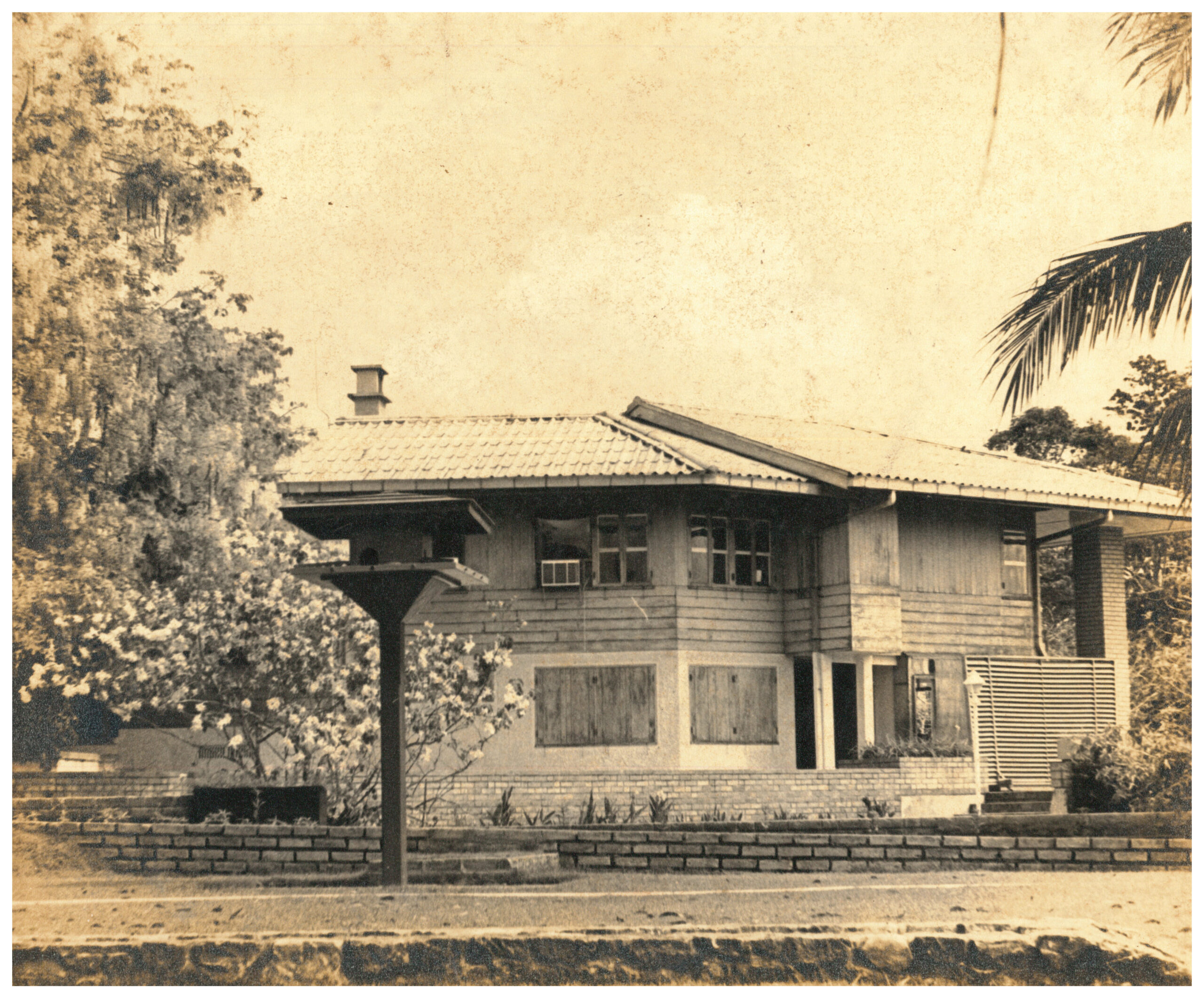
The ‘farm house’ consisted of three main building. The main grey house where the Queen lived was one and a half storeys built of brick and wood. . A small bungalow stood next door, at which visiting relatives from Bangkok stayed. A larger house at a distance, painted brick red, served as the living quarters of the Queen’s secretary.
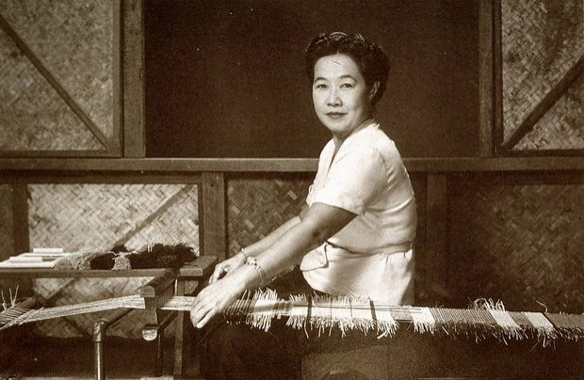
H.M. Queen Rambhai Barni was from the very beginning intent on improving the quality of the rush mats the Chantaburi villagers were already making. She wanted to see how to ensure that their colour did not run and to develop the mats that were only used for sitting and sleeping on into products with other uses as tissue boxes and handbags. The Queen herself then learnt to weave the matting material. She used the skills withtextiles she accumulated in her youth to produce new designs and also softer colours. She spent some hours everyday with the weavers, gently encouraging them to produce her designs and to think up new ones of their own. She also did the marketing and public relations. She changed from using leather handbags to mat ones. The label on the products bore a design of a villager carrying a pole and baskets and the words “S.B.K., The Peasant & Home Industries, Rambhai Pana, Thailand”, a tribute the Queen made to the ordinary villagers’ labour and skill
พระเมตตาอนามัยราษฎร์
When H.M. Queen Rambhai Barni sojourned to Chantaburi in 1950, she cut her finger and went to the then dilapidated Provincial Hospital. Only one strip of plaster could be found there. In her compassion, she worried about the kind of health care the locals were receiving.
She was prompted to do something about it. By 1953, she had sought to raise money to build a surgery building for the hospital. A play, scripted by M.C. Subha Svasti, on the theme taken from Agatha Christie’s story ‘Ten Minute Alibi’, was staged by amateurs, relatives and friends of the Queen.
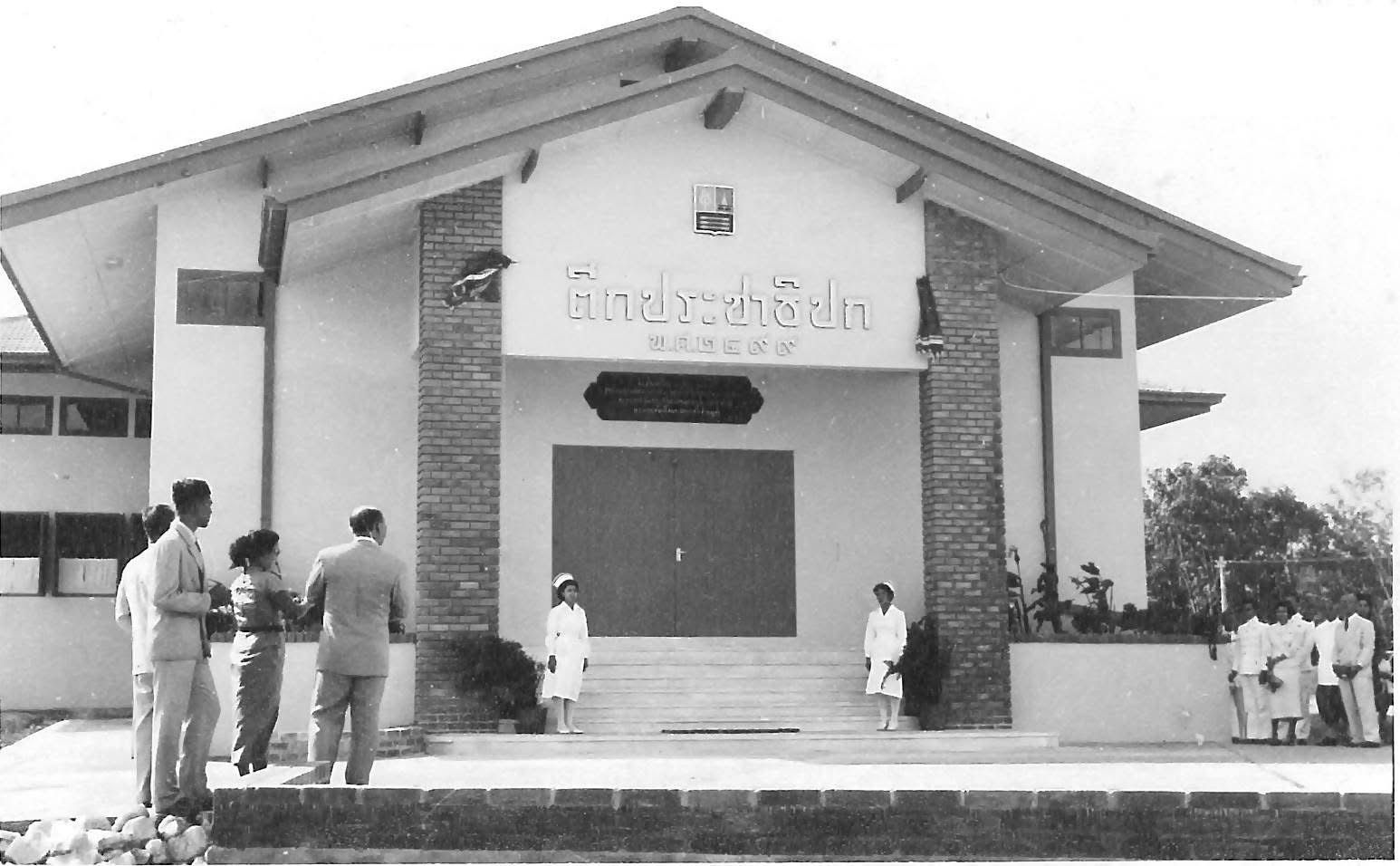
Built with her own money and that so raised, the well-equipped surgery building was ready in December 1955. The Queen named it “the Prajadhipok Building” in loving memory of the Late King. She had a bust of him and his ‘Saktidej’ coat of arms placed at the entrance.
This personal initiative of hers caught the attention of the government which then allocated a budget for modernizing the hospital. On November 17, 1956, H.M. King Bhumibol Adulyadej and H.M. Queen Sirikit presided over the opening of the Prajadhipok Building and the revamped hospital, with H.M. Queen Rambhai Barni anointing the plaque bearing the hospital’s new name of ‘Phra Pok Klao Hospital, Chantaburi,’ also in memory of H.M. King Rama VII.
H.M. Queen Rambhai Barni in 1966 granted her Royal Patronage to the Hospital and its School of Nursing and also contributed more money from her own purse and from donations to the Hospital’s foundation. The Queen also established her own ‘Prajadhipok Fund’ from which the Hospital could seek grants for activities not supported by the government budget. In due course she also donated to the Nursing School’s scholarship fund and regularly presented graduating certificates.
The Queen’s concern for the health of the people was also evident in her private life. A daughter of her maid, a Chantaburi villager, who was born at the Queen’s abode there, was encouraged to study to become a nurse, “an occupation which helps people”. The girl followed the Queen’s advice and having graduated, nursed Her Majesty in her advanced years and continues to serve the locals at the Chantaburi Hospital in accordance with Her Majesty’s wish.
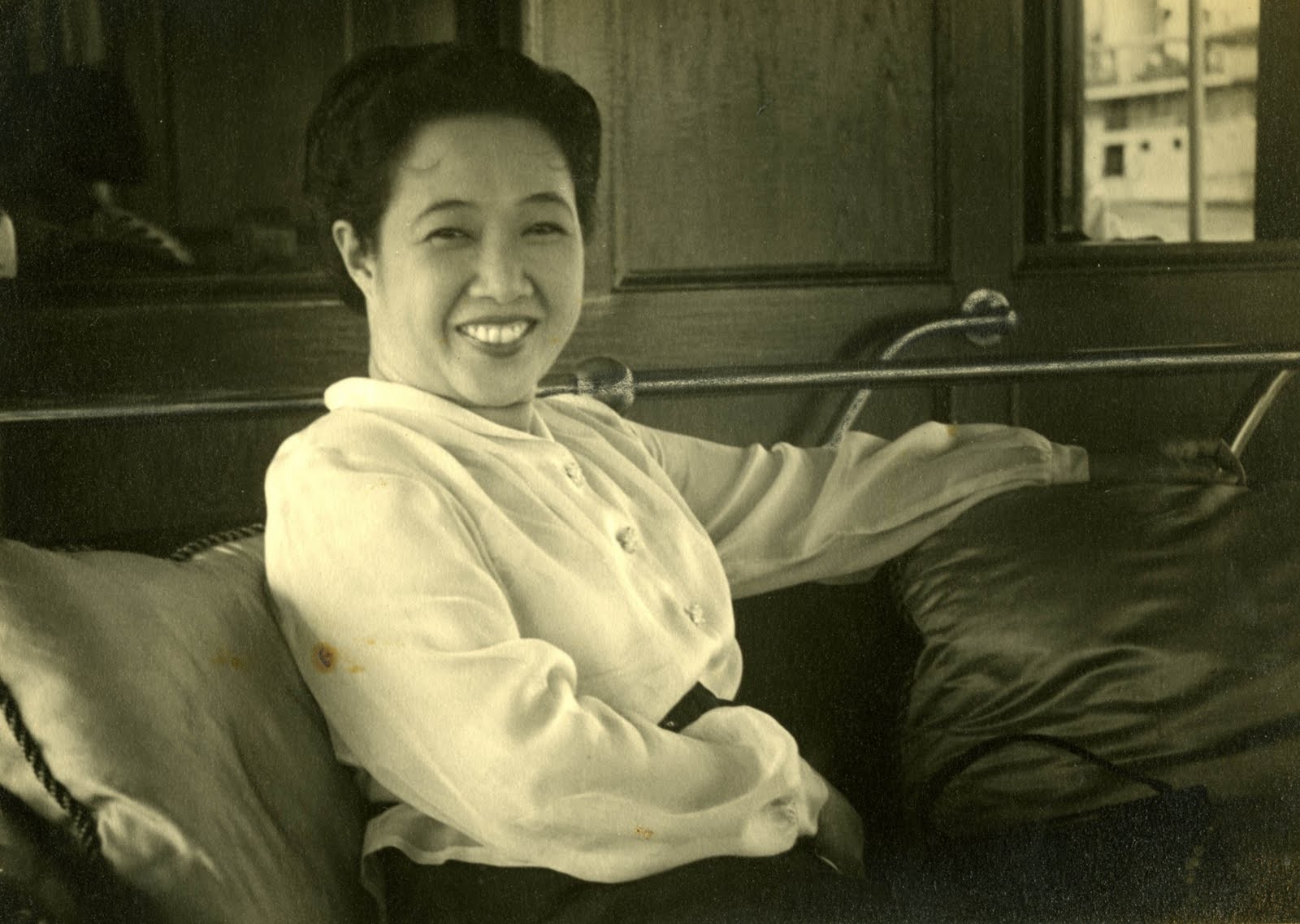
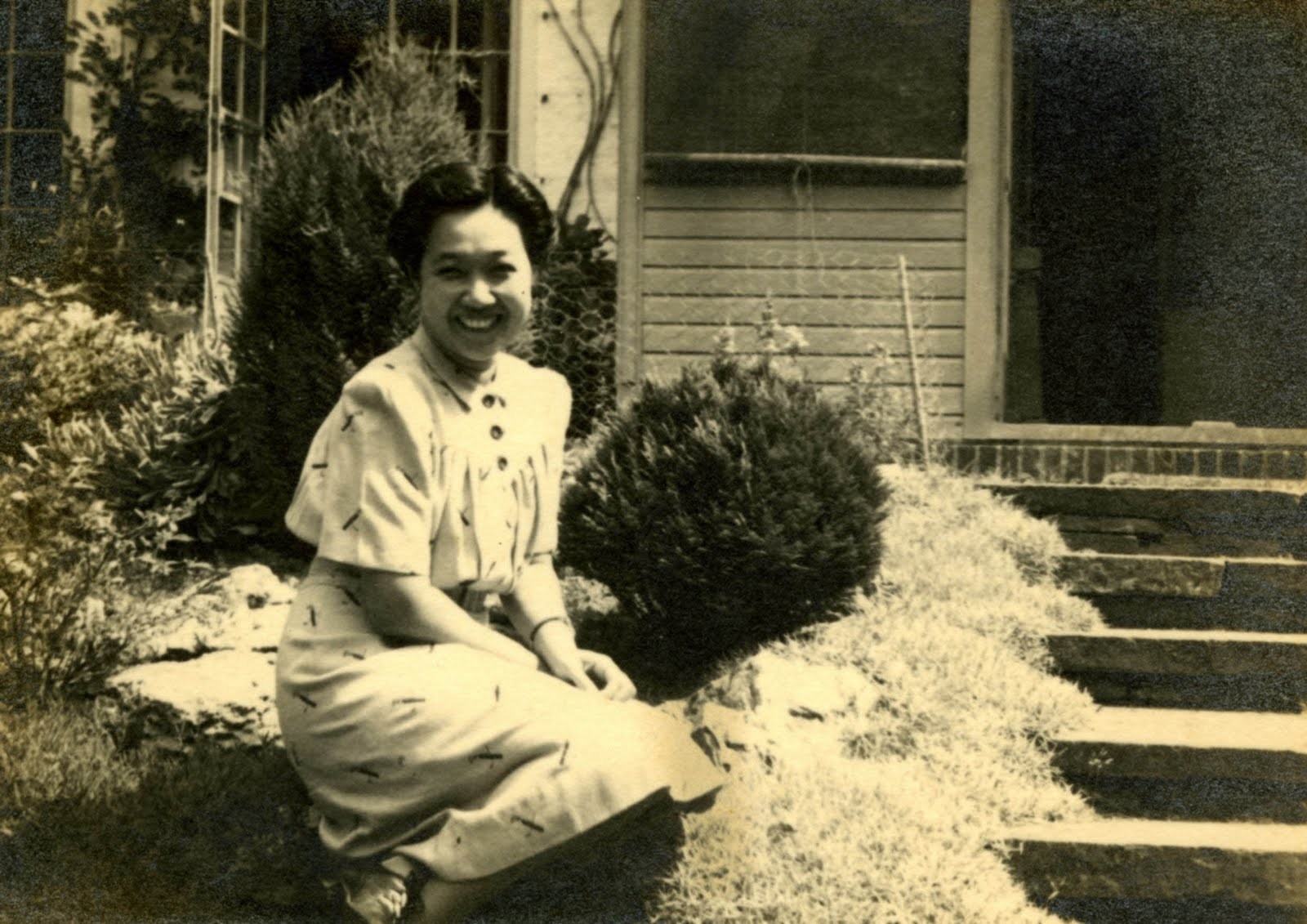
In the 18 years spent at Chantaburi, H.M. Queen Rambhai Barni lived among the villagers in as ordinary a way as possible for her who was Queen of the Seventh Reign.
ทรงพระราชอุทิศ “สวนบ้านแก้ว” เพื่อการศึกษา
In 1968, H.M. Queen Rambhai Barni decided to move from Suan Ban Kaew to Bangkok to live at Sukhodaya Palace. She was 64 years old and there were few male relatives remaining with her in Chantaburi. Earlier, when the government heard that the Queen was moving from Suan Ban Kaew, it offered her 18 million bahts to buy it so as to set up the Chantaburi Teachers’ Training College. Ever since, Her Majesty constantly contributed donations to the College which, after her death become “Rambhai Barni College” in 1985 and developed into “Rambhai Barni Rajabhat University” in 2004 as a provincial university along the lines of Her Majesty’s bequest to education.
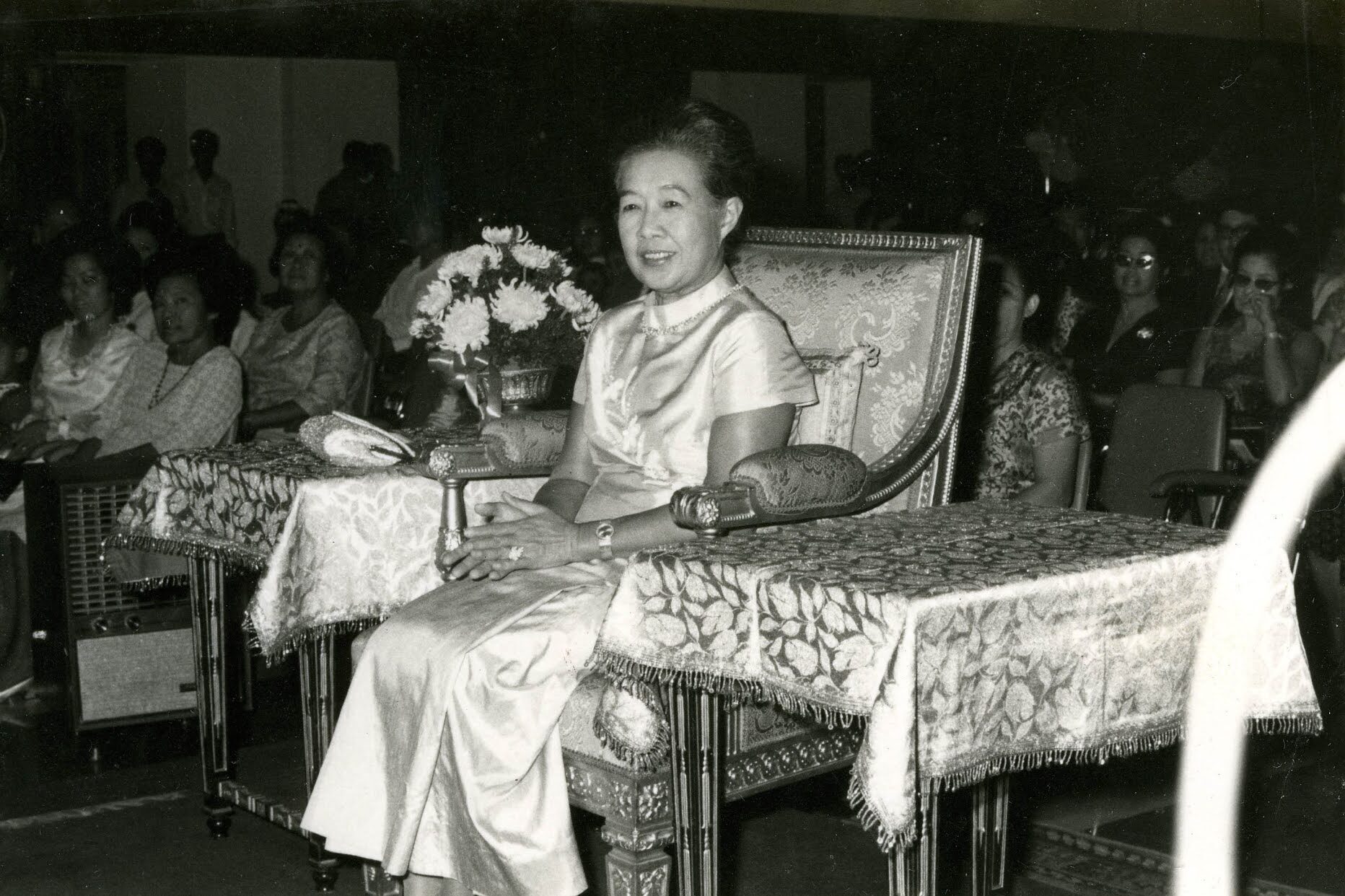
เมื่อสมเด็จพระนางเจ้ารำไพพรรณีฯ เสด็จฯ กลับมาประทับที่
วังศุโขทัย ในพุทธศักราช 2511 รอยแย้มพระสรวลอันอบอุ่นและอบอวลด้วยพระเมตตา ทำให้วังแห่งนี้เปี่ยมไปด้วยบรรยากาศ แห่งความสุขอีกครั้ง
เมื่อยังทรงพระพลานามัยสมบูรณ์ ทุกโอกาสที่เสด็จฯ มาประทับในกรุงเทพมหานคร ได้ทรงรับสนองพระมหากรุณาธิคุณแบ่งเบาพระราชภาระพระบาทสมเด็จพระเจ้าอยู่หัวและสมเด็จพระนางเจ้าสิริกิติ์ พระบรมราชินีนาถตามที่ทรงพระกรุณาโปรดเกล้าฯ ให้เป็นผู้แทนพระองค์ไปทรงปฏิบัติพระราชกรณียกิจต่างๆ
รวมทั้งทรงรับรองพระราชอาคันตุกะที่เสด็จฯ มาเยือนประเทศไทยอย่างเป็นทางการและเป็นการส่วนพระองค์ และยังโปรดเสด็จฯ ประพาสหัวเมืองเพื่อสำราญพระอิริยาบถ และทรงเยี่ยมราษฎรเป็นครั้งคราว
ธำรงเกียรติพระภูมินทร์ปิ่นสยาม
สมเด็จพระนางเจ้ารำไพพรรณีฯ ทรงกอร์ปด้วยพระราชหฤทัยมั่นคงจงรักและธำรงรักษาพระเกียรติยศพระบาทสมเด็จพระปกเกล้าเจ้าอยู่หัวตลอดพระชนม์ชีพ โปรดเกล้าฯ พระราชทานนามสิ่งต่างๆ และ ทรงริเริ่มสิ่งสาธารณประโยชน์เป็นอนุสรณ์รำลึกถึงพระราชสวามี ได้แก่ พระราชทานนาม “ตึกประชาธิปก” ณ โรงพยาบาลพระปกเกล้า ซึ่งเป็นโรงพยาบาลประจำจังหวัดจันทบุรี ทรงจัดตั้ง“ทุนประชาธิปก” เพื่อสนับสนุนกิจการโรงพยาบาลและวิทยาลัยพยาบาลพระปกเกล้า ปัจจุบันคือมูลนิธิประชาธิปก–รำไพพรรณี
นอกจากนี้ยังพระราชทานฉลองพระองค์ และสิ่งของใช้ ส่วนพระองค์ของพระบาทสมเด็จพระปกเกล้าฯ แก่รัฐสภาเพื่อจัดตั้ง “พิพิธภัณฑ์พระบาทสมเด็จพระปกเกล้าเจ้าอยู่หัว”
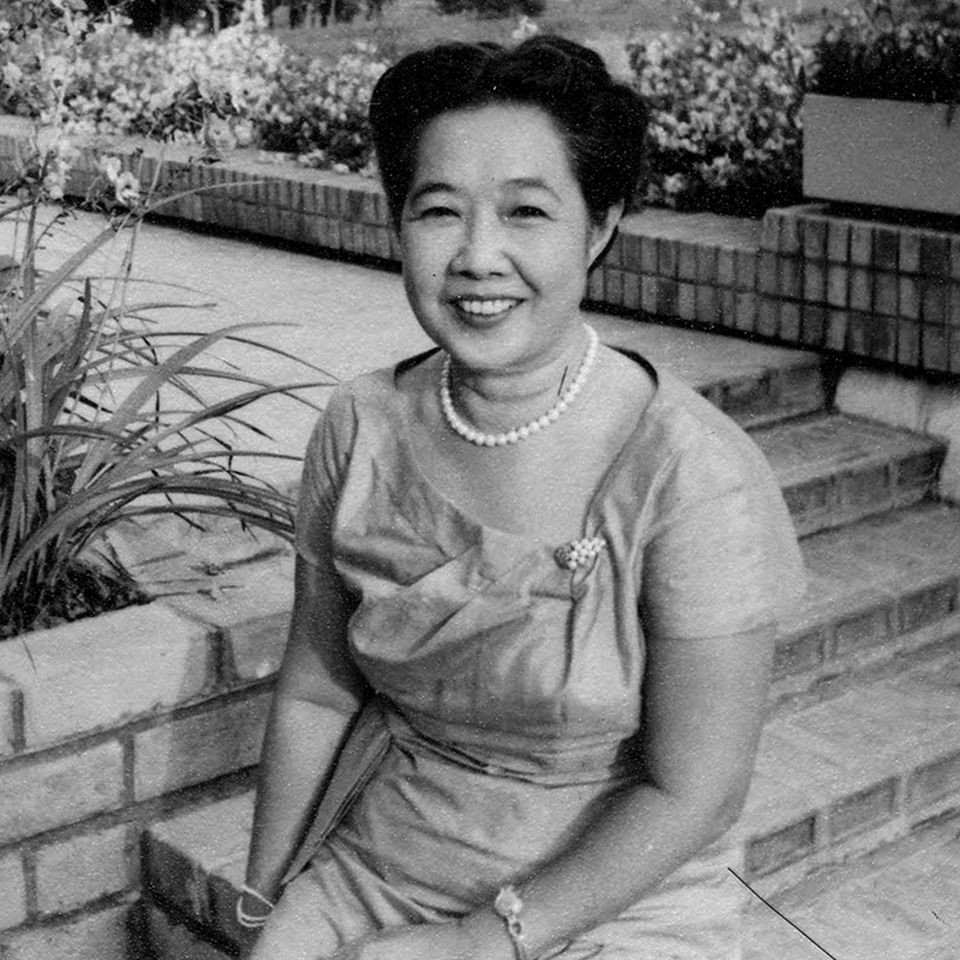
เย็นศิระเพราะพระบารมี
When she returned, the Queen brought a small contingent of the Chantaburi rush mat artisans with her. She converted the little ginger bread cottage by the canal into the new workshop where the Palace girls were to learn the art from the provincial experts.
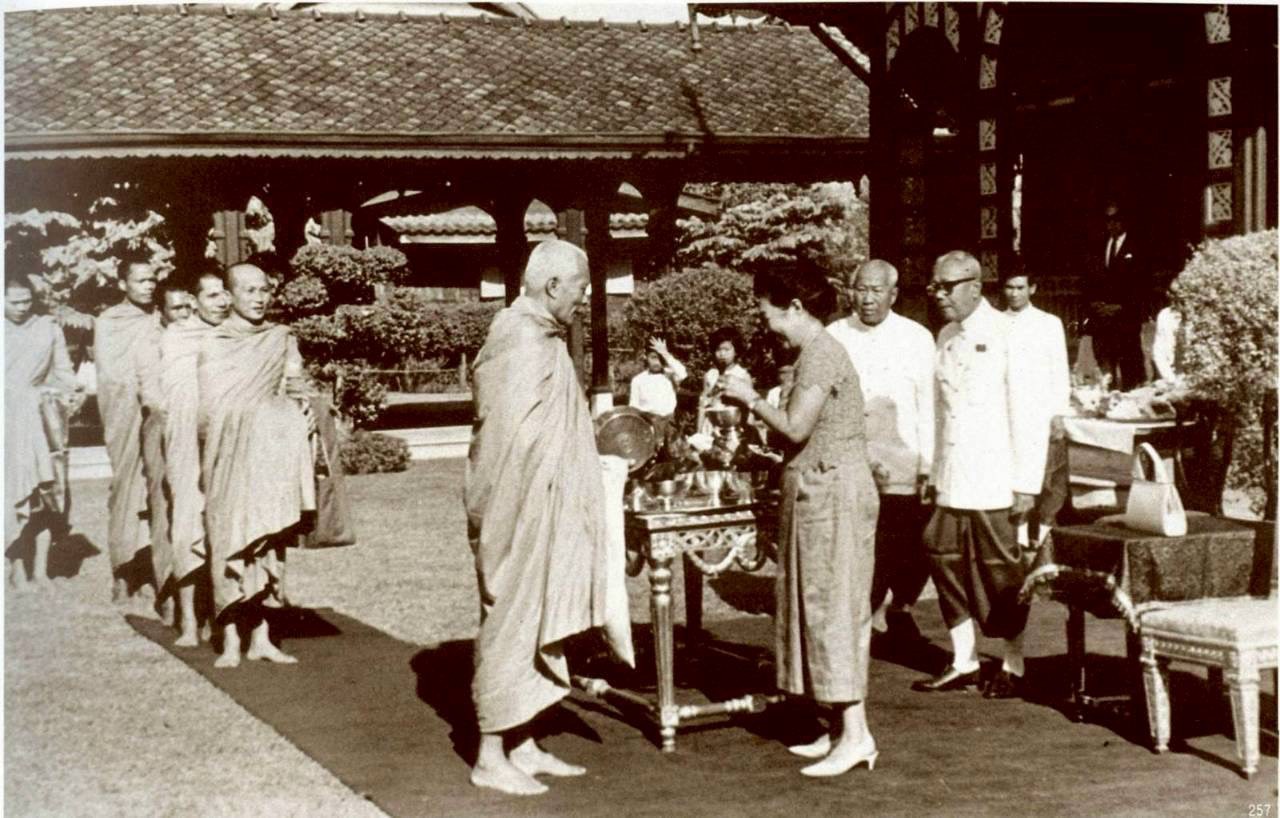
Her Majesty now took up some royal duties of traveling to the provinces occasionally. She joined Their Majesties in receiving foreign dignatories and invited visiting royalties to Sukhodaya Palace. She presented robes to monks and certificates to college students, and also presided over many social gatherings
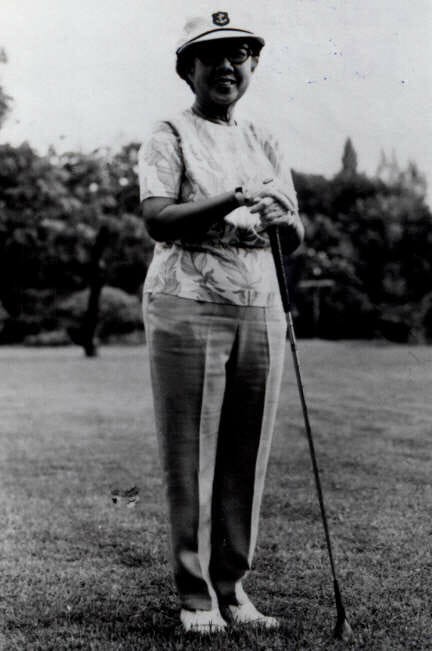
กีฬากอล์ฟในพระบรมราชินูปถัมภ์
Golf was a sport H.M. Queen Rambhai Barni engaged in with the
Late King ever since they married. She played golf regularly, often presided at opening of golf courses and went to play whenever invited, often in the provinces. Members of many golf clubs thus held her dear to their hearts. They well remember her special ‘One Chip-One Putt’ technique. Consequently, when golfers heard of her “Prajadhipok Fund” to assist the Phra Pok Klao Hospital in Chantaburi, they rallied to organize a golf competition in December 1971, to raise money to present to her as a birthday present.
At Sukhodaya Palace, she had a golf course. Even when she was old and frail, she would quickly finish her afternoon tea and reach for her golf clubs and off she went to play. She did so until she experienced difficulties with walking due to strokes.
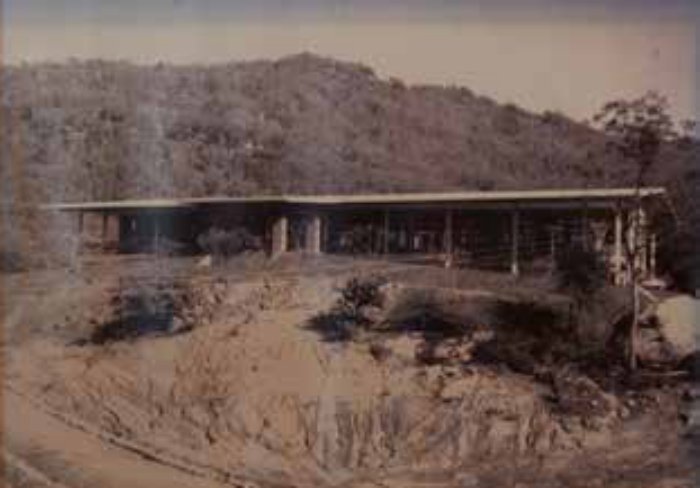
แมกไม้สายลมที่พระตำหนักชมดง
In her advanced years, H.M. Queen Rambhai Barni wanted to have a place of her own to stay in Hua Hin so that she could play golf there again. She built a house near the top of the Hin Lek Fai hill above the Royal Golf course. Again, she chose for it the simple name of ‘Chom Dong’ (Among the Woods) because it was on a wooded slope
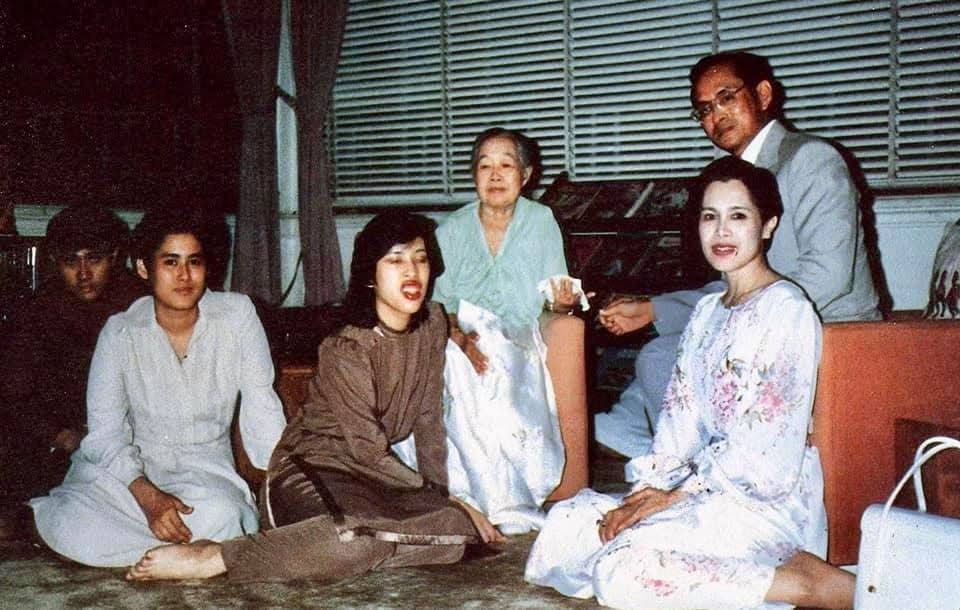
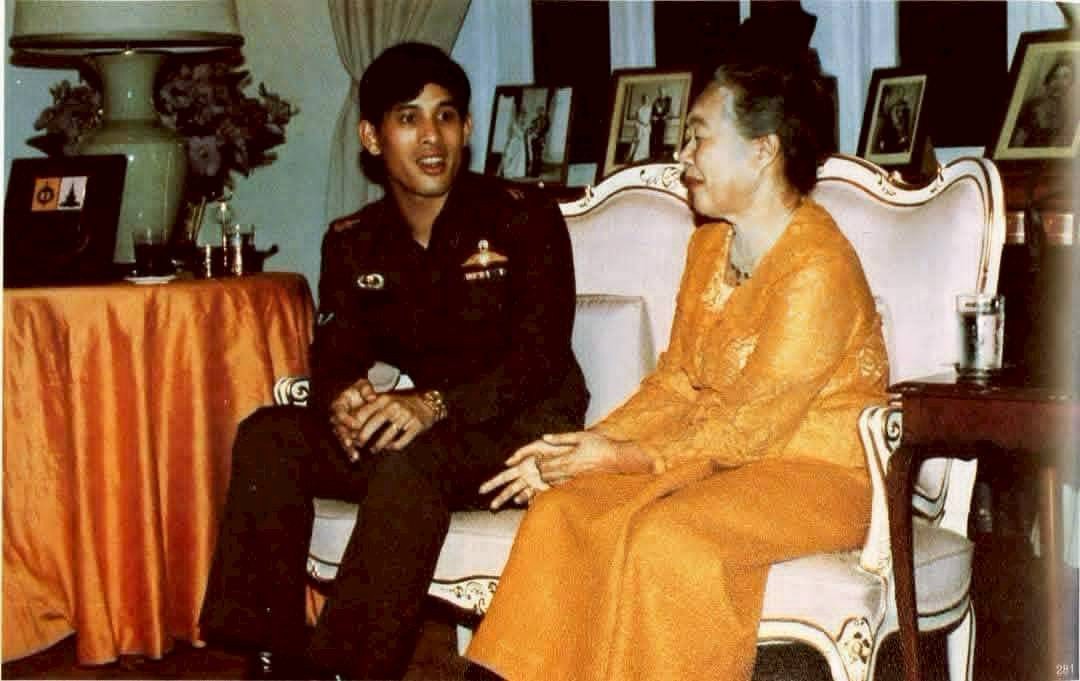
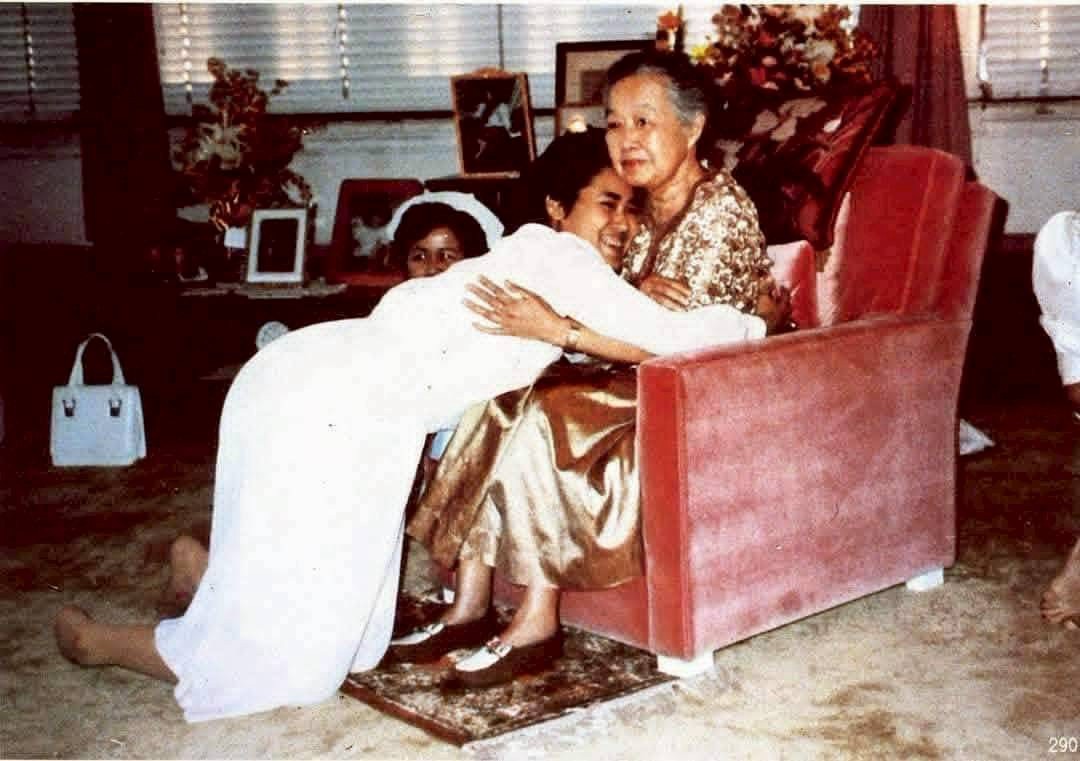
Fond Farewell as the Sun Sets
Her Majesty’s health worsened until by 1978 she was rarely seen outside the Palace. Alas ! H.M. Queen Rambhai Barni of the Seventh Reign passed away as a result of heart failure, peacefully in her bedroom, at 3.50 p.m. May 22, 1984, aged 79 years, 5 month and 2 days.
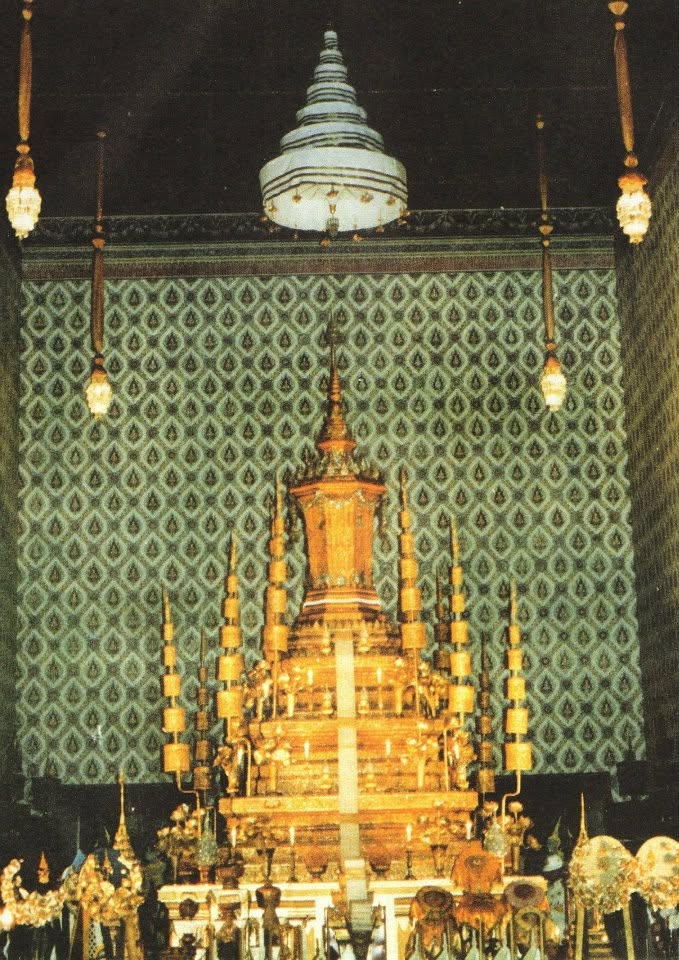
The Royal Lying-in-State and Cremation
พระบาทสมเด็จพระเจ้าอยู่หัว ทรงพระกรุณาโปรดเกล้าฯ ให้ประดิษฐานพระบรมศพสมเด็จพระนางเจ้ารำไพพรรณี พระบรมราชินีในรัชกาลที่ 7 ณ พระที่นั่งดุสิตมหาปราสาท พระบรมมหาราชวัง ถวายพระเกียรติยศตามราชประเพณี
และทรงพระกรุณาโปรดเกล้าฯ ให้ตั้งการพระราชพิธีถวายพระเพลิงพระบรมศพสมเด็จพระนางเจ้ารำไพพรรณี พระบรมราชินีในรัชกาลที่ 7 ณ พระเมรุมาศท้องสนามหลวง ในวันที่ 9 เมษายน พุทธศักราช 2528 มีประชาชนจากทั่วสารทิศร่วมส่งเสด็จสู่สวรรคาลัยด้วยสำนึกในพระมหากรุณาธิคุณที่ทรงพระกรุณาโปรดเกล้าฯ พระราชทานแก่พสกนิกรชาวไทยสืบเนื่องมา